Six Nights on the Chobe: From Ichingo to the Chobe Princess
What Six Nights on the Chobe Really Feels Like
By Chereé Thomson, Marketing Manager, Zambezi Queen Collection
Chereé travelled with her sister to Ichingo Chobe River Lodge and Chobe Princess in April 2024. More than two years later, with a little help from the photographs she took along the way, these are the moments and feelings she still remembers.
There is a moment I remember very clearly from travelling to the Chobe with my sister. It wasn’t an elephant sighting, a tiger fish or even one of the spectacular sunsets we would see over the next six nights. It was the moment we stepped into the tender boat at Kasane Immigration and, after a day of airports, vehicles and border crossings, finally left the road behind.
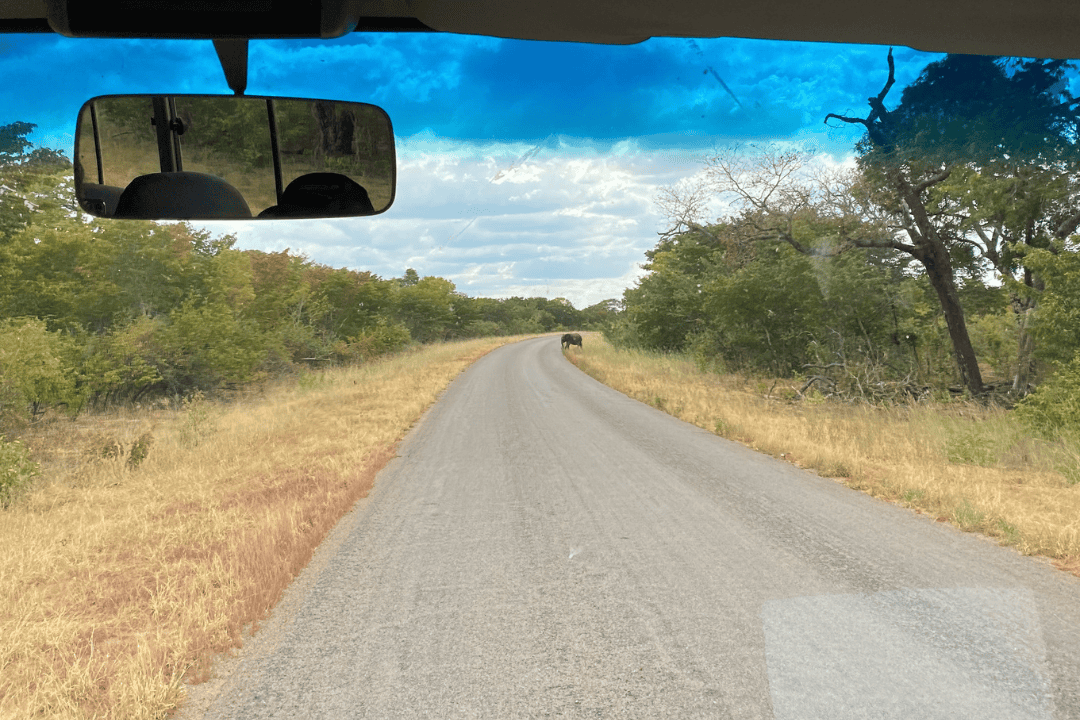
We had started early that morning in Cape Town, had a short connection in Johannesburg and then flown to Victoria Falls, where Wild Horizons collected us for the road transfer to the Zambezi Queen Collection. Even though it had already been a relatively long travel day, the drive was unexpectedly enjoyable. The road runs through a wildlife area and isn’t somewhere you necessarily want to race through. We saw elephants and giraffes along the way, and quickly realised it was worth keeping our eyes outside rather than treating the drive as dead time between destinations.
Crossing the borders was an experience in itself. We stamped out of Zimbabwe, which included walking our shoes through the disinfectant solution used as part of foot-and-mouth disease controls. I’ll admit that it looks slightly alarming when you first see it, particularly after many travellers have already stepped through it, but it really wasn’t bad and, in the heat, our shoes dried almost immediately. From there, we drove the short distance to the Botswana border, completed immigration, changed transfer vehicles and continued towards Kasane. The transfer teams were wonderful throughout, helping with our luggage and making what could have felt like a complicated series of border crossings surprisingly straightforward.
By the time we reached Kasane Immigration, though, I was ready to get out of a vehicle. A member of the Zambezi Queen Collection team met us there, helped with our bags and guided us through passport control. Then we walked the short distance down to the jetty.
And that was where, for me, the safari really began
When the river becomes the road
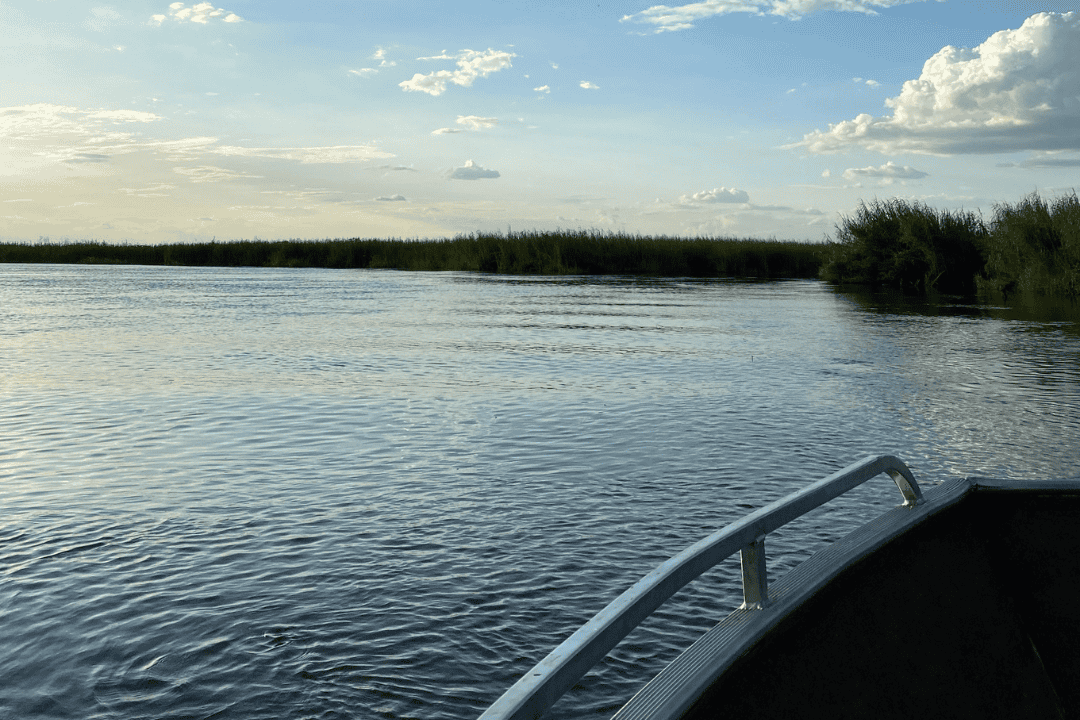
We had spent the previous few hours getting in and out of vehicles, so the simple act of stepping into the tender boat felt completely different. Suddenly there was water beneath us, open space around us and a breeze coming off the river. It was almost an immediate physical shift in pace. We weren’t transferring anymore. We were on the Chobe.
This was also where we met Success, who would be our guide throughout our stay at Ichingo. He welcomed us to the Chobe and the Zambezi Queen Collection, helped us prepare our Namibian immigration forms and explained what would happen next. As South African residents, our own entry requirements were uncomplicated, but international travellers should always check the current visa requirements applicable to their nationality before travelling.
We glided across the river to the Impalila Island immigration post, where Success remained with our luggage while we walked the short distance up to have our passports stamped. Standing there, it occurred to me just how much ground we had covered. We had woken up in South Africa, flown through Johannesburg into Zimbabwe, driven across Botswana and were now being welcomed into Namibia. Four countries in around 12 hours. There is something quite extraordinary about this particular corner of Africa, where four countries come together around these waterways, and suddenly seeing that geography play out in real life was fascinating.
With passports stamped, we walked back down to find Success waiting with the boat and our bags. From there, we continued towards Ichingo, moving slowly through the river channels, passing the Bush Robot and heading towards the area where these countries meet. Then we rounded a bend and caught our first glimpse of the lodge.
I was so excited.
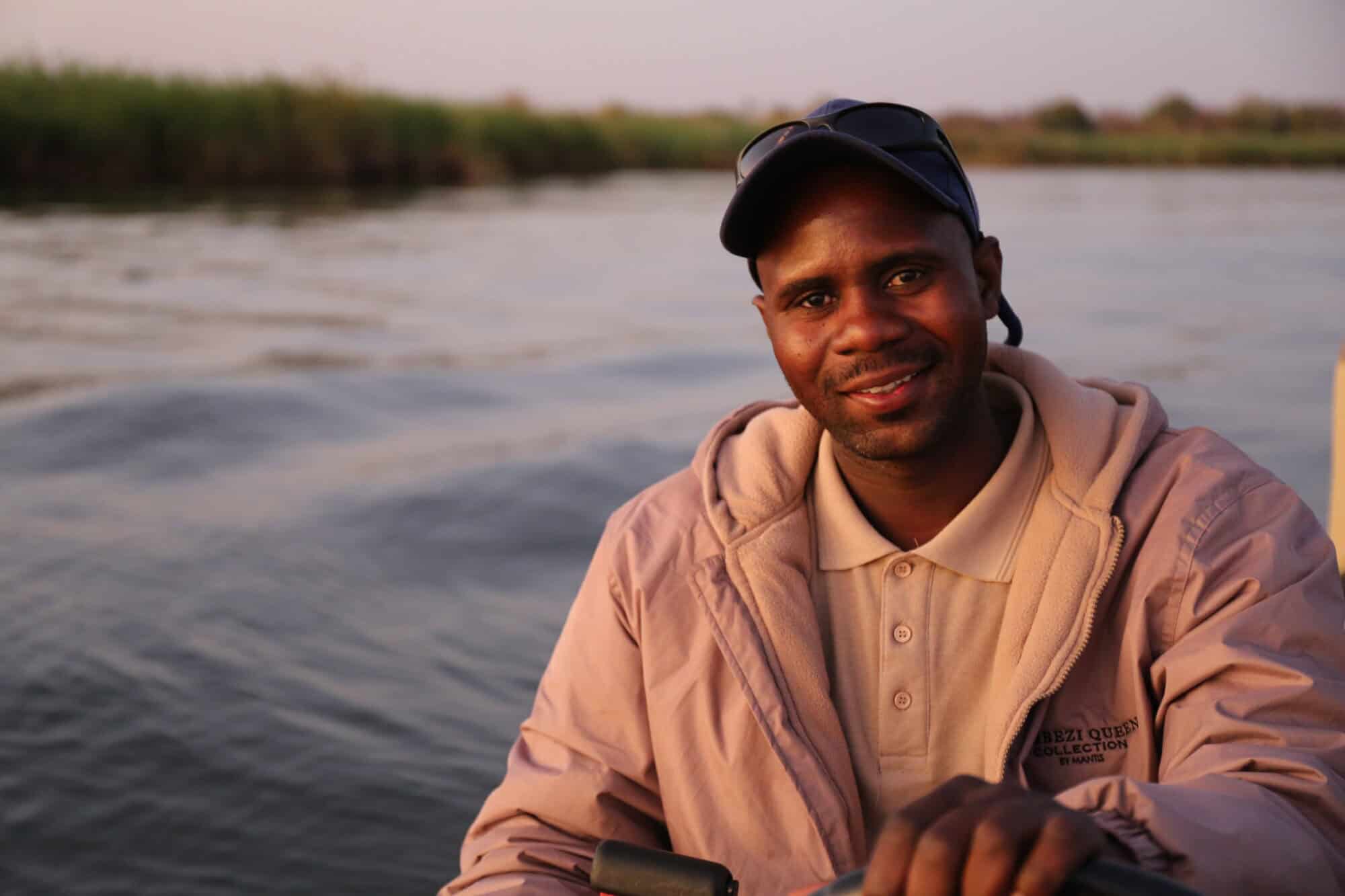
Our island home at Ichingo
Kennedy and Cassius were waiting to welcome us, both with the most infectious smiles. Their warmth was immediate, and even now, when I think about Ichingo, that welcome is one of the first things that comes back to me. There wasn’t anything overly formal about it. It just felt genuinely warm.
We were shown to our tent, freshened up after the day’s travelling and then settled into the lounge with a cold glass of wine and something to eat. Not long afterwards, Success appeared again. The sunset was looking promising, he said. Would we like to head out for a sundowner?
There was only one possible answer.
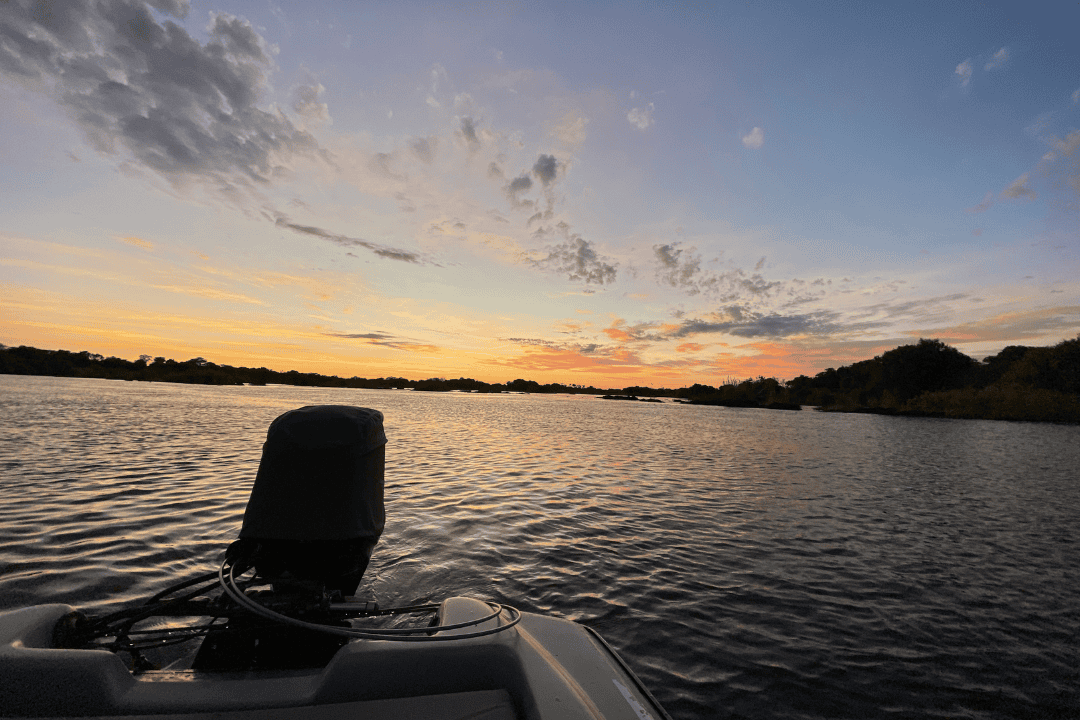
He took us towards the Kasai Channel, where the water that evening was so still it looked like a mirror. After the movement of the day, sitting on that boat watching the colours change across perfectly calm water felt almost surreal. We returned to Ichingo before the last of the light disappeared and settled back into the lounge with some biltong and snacks, sent our families a quick WhatsApp as proof of life, and about an hour later sat down to dinner. There was chicken liver parfait with crisp toasted bread, lamb chops with roasted sweet potato and vegetables, followed by the lightest vanilla crème brûlée with a perfectly crisp sugar top.
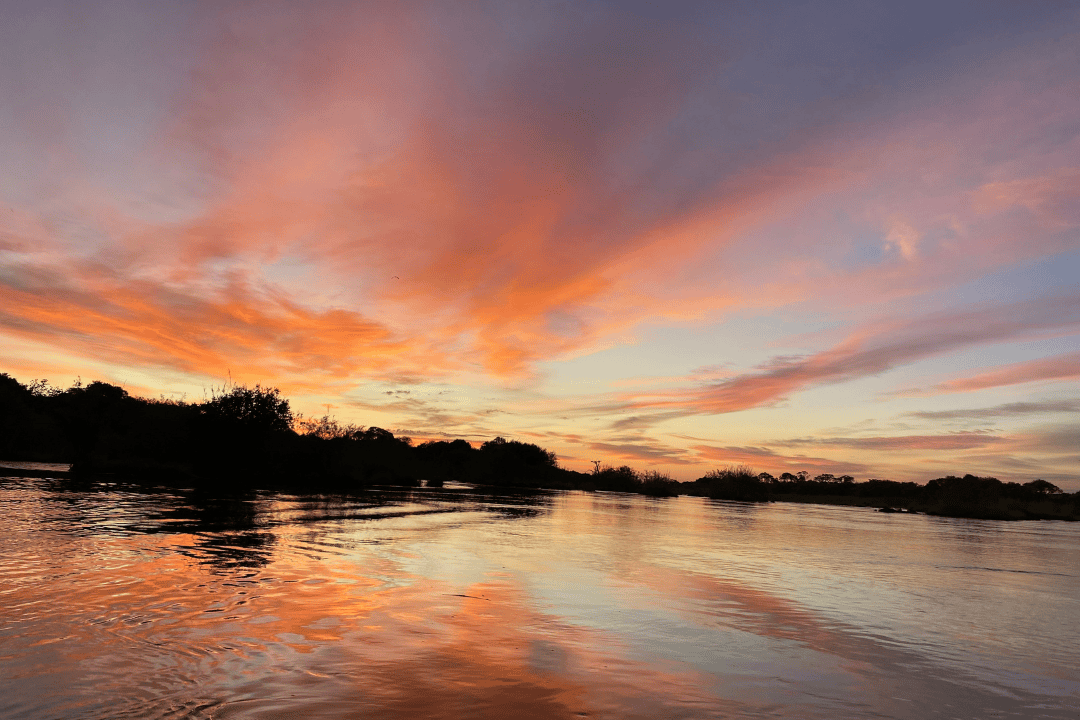
By about 8:15 pm, we had finished dessert. Twelve hours earlier we’d been in Cape Town. Now we were sitting on an island in Namibia after watching the sunset over the Chobe. Travel days don’t always need to feel like days you’ve lost.
We headed back to our tent, where the air conditioning had cooled everything beautifully despite the warmth outside, and settled in for the night. We had an early start ahead of us.
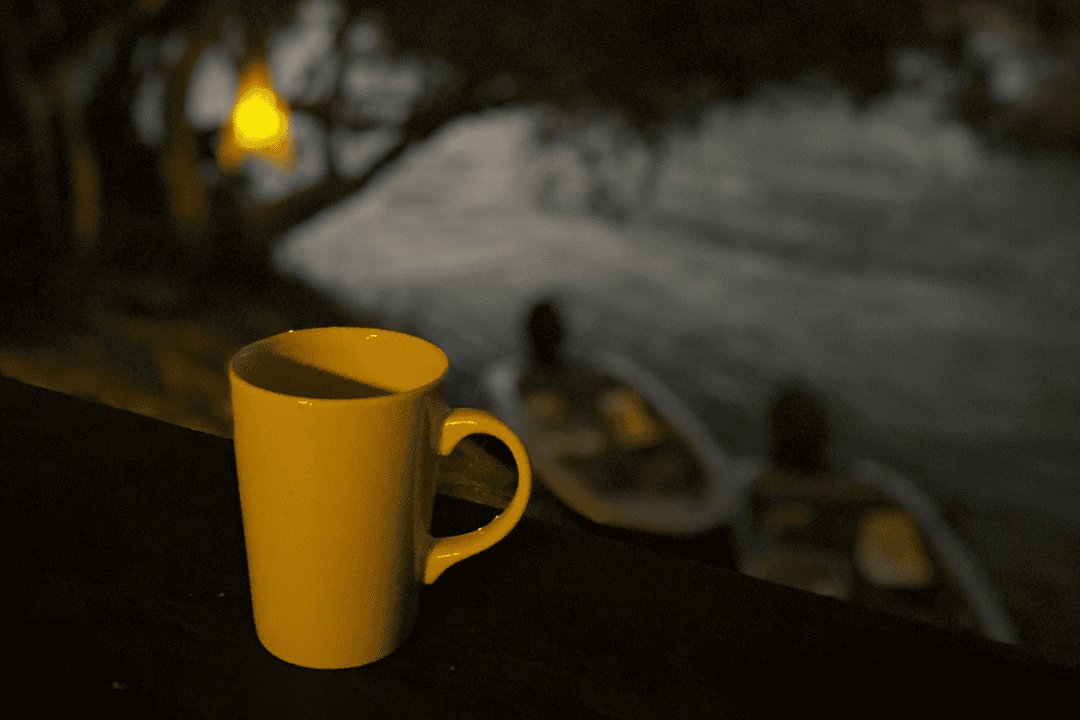
Following whatever caught our attention
The next morning started the way many of our mornings at Ichingo would: coffee first. We made fresh cups from the bean-to-cup machine, helped ourselves to a rusk or three, picked up our bird species checklists and met Success at our allocated boat just before 6:15 am.
We hadn’t even properly left the lodge when Success pointed out a white-backed night heron roosting only a few metres from the stairs at Ichingo. First bird of the morning, and our first tick on the list. We headed back towards the Kasai Channel as the sun began to rise, keeping an eye out for a lesser jacana. We didn’t find one that morning, but there were African jacanas everywhere, delicately making their way across the lily pads, and so many other birds to stop for that eventually we realised we hadn’t even set up our fishing rods.
That morning captured something I came to love about Ichingo. Each tent has its own guide and tender boat, so our time with Success didn’t need to follow a rigid group itinerary. We could leave early, stay somewhere longer, change our minds, follow a bird, try our hand at fishing or simply see where the morning took us. Over several days, he also got to know us and what interested us, which meant the experience became increasingly personal without ever feeling programmed.
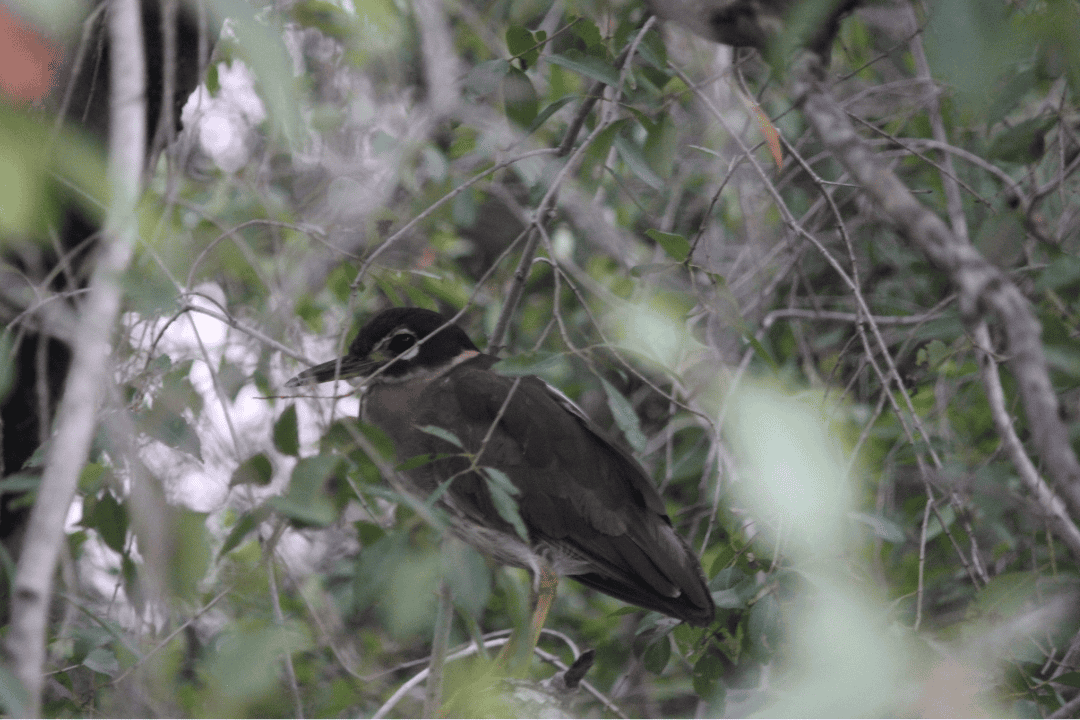
After about two hours on the river, we headed back for breakfast. We were the only guests at the lodge that morning, and the team had laid out this beautiful little breakfast buffet for two: jars of yoghurt and homemade muesli, cheeses and cold meats, crackers, fresh muffins and fruit. There was the option of ordering a cooked breakfast too, but we didn’t need it. After a warm morning on the water, the cool breakfast was exactly what we felt like eating.
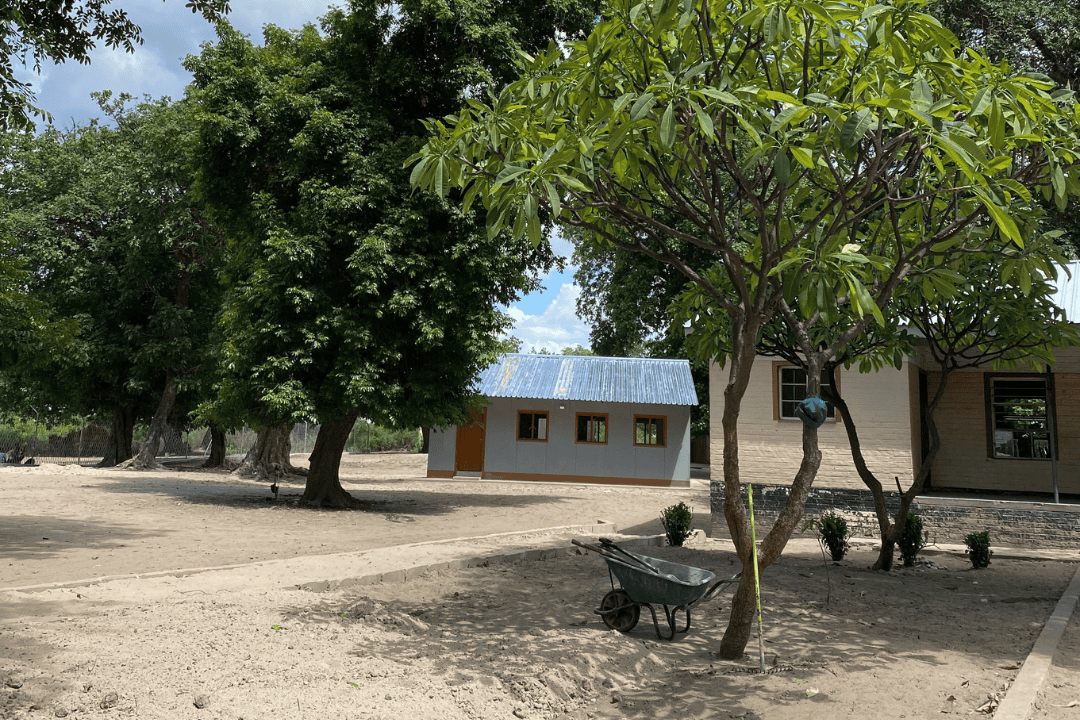
I should explain at this point that I was at Ichingo partly for work. My sister was very much on holiday, which meant that while she got to enjoy some well-earned downtime, I spent part of that day with Jana and Stewart visiting community projects in the area. We first travelled to the newly built Mbalasinte boys’ hostel and later headed to Kasika, where, at the time of our visit in April 2024, work on the library was still in progress. We also saw renovated classrooms and walkways. These visits aren’t part of the standard guest experience, but for me they were incredibly valuable. I had known about the projects, but seeing them first-hand gave me a completely different understanding of the need behind them and of the initiatives towards which guest community development levies contribute.
Naturally, there was plenty of birding on the journey back too.
By the time I returned to Ichingo, it was around 3 pm, but the team still served us lunch. Afterwards, my sister and I headed back onto the river with Success, this time determined to actually fish. My success was limited. My sister, however, caught an enormous catfish and a little tiger fish, which she was understandably very pleased about.
I was pleased for her too.
Eventually.
Fishing, villages and standing inside a tree
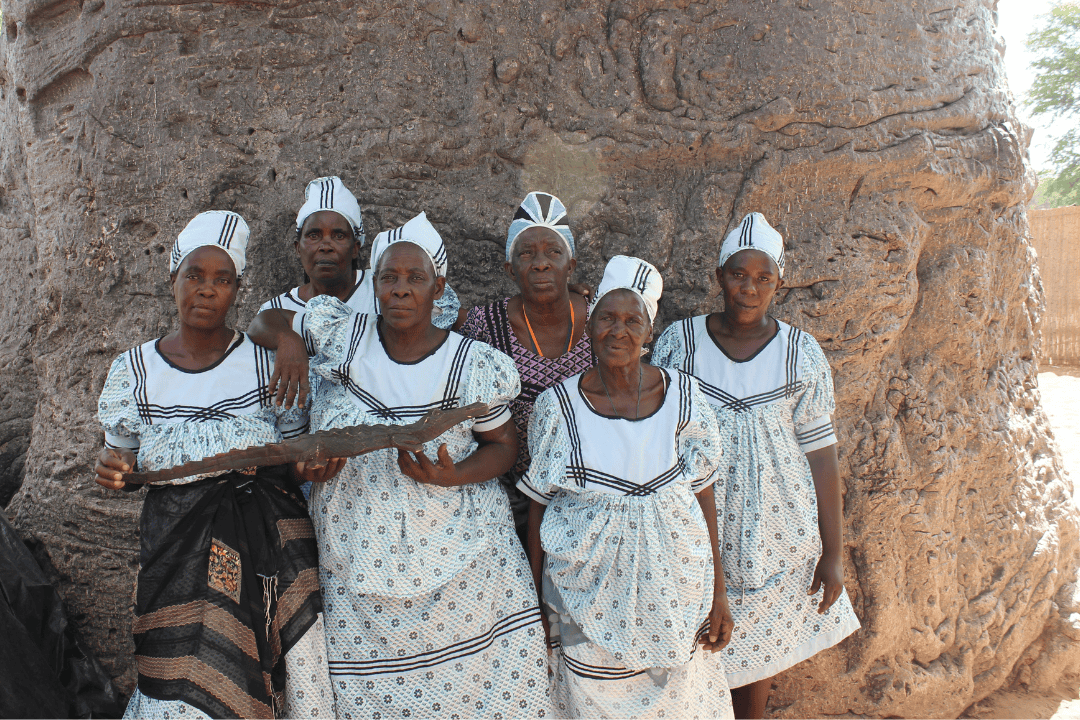
The next couple of days found their own rhythm. We were up early for birding, spent time fishing, joined a cultural visit at Kasika and explored more of Impalila Island. One afternoon we visited an enormous hollow baobab tree and were able to physically walk inside its trunk.
There are experiences you know you’re going to have on safari. You expect to see wildlife. You hope for beautiful sunsets. You know there will probably be an early wake-up or two.
I had never expected to stand inside a tree.
The Subiya people we met during our time exploring the island were incredibly warm and welcoming, and after another busy day, we returned to Ichingo completely wiped out. For once, we made the sensible decision to do absolutely nothing for the rest of the afternoon and relaxed beside the pool.
Our final morning arrived far too quickly, and I still had unfinished business with the tiger fish. We left early again, with Success pointing out birds along the way as we travelled towards the Zambezi River and the area where the Kasai and Zambezi meet. From there, we began drifting back towards the Chobe with the fishing rods finally getting our full attention.
Tiger fishing is every bit as challenging as people say it is. I had read about the fight, but I wasn’t quite prepared for it. When I finally caught one, the thrill was enormous.
And then I caught another.
Both were safely released and swam away strongly, and I returned to Ichingo feeling rather more accomplished than I had after watching my sister catch fish while I caught nothing.
We packed our bags and said our goodbyes. I genuinely didn’t want to leave. Over those few days, Ichingo had become our home base. We knew where we’d find our morning coffee, Success knew exactly what would get us excited, and the warmth of Kennedy, Cassius and the rest of the team had made the lodge feel wonderfully familiar.
But we weren’t really leaving the Chobe.
We were simply about to experience it differently.
From exploring the river to living on it
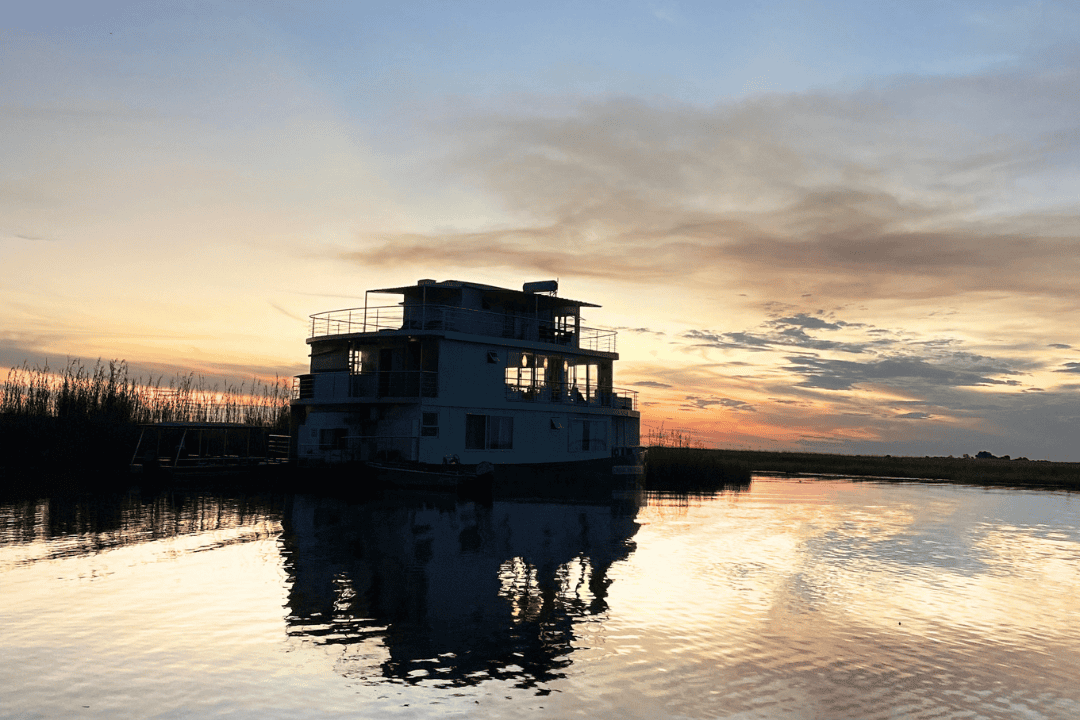
The Chobe Princess was moored further along the river towards Kasane, and when we arrived, Robert welcomed us onboard and showed us to our cabin. It was spacious, beautifully comfortable and en-suite, and after the rustic island setting of Ichingo, stepping aboard gave the next part of the trip a noticeably different feel.
We were the first guests to arrive, so we made ourselves comfortable on the pool deck with a cold welcome lemonade.
Then the Chobe Princess began to move.
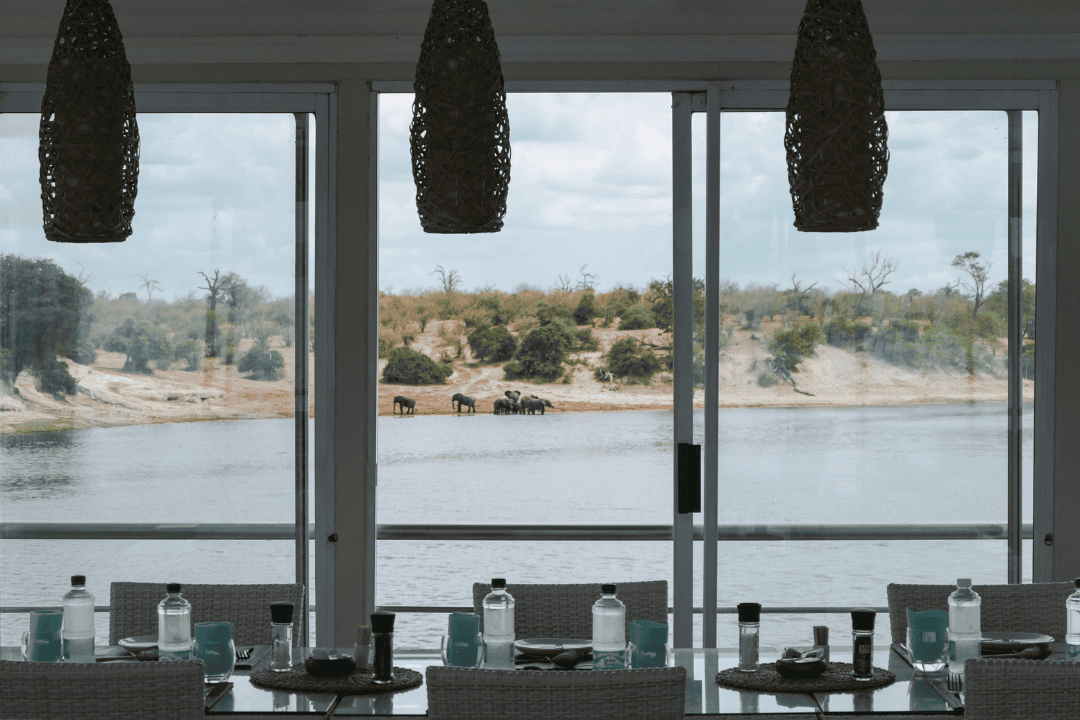
Lunch was served while we sailed towards Elephant Bay: tempura prawns and melon salad, roasted sweet potato, grilled vegetables and chicken satay, followed by a floating island dessert. Outside, meanwhile, elephants and buffalo were appearing along the riverbanks.
This was when the difference between the two experiences really clicked for me.
At Ichingo, we had our island home and went out with Success each day to explore. On the Chobe Princess, we were living inside the experience. We could still head out on tender boats for closer wildlife viewing, but even while we were having lunch or sitting on deck, the safari continued around us.
Seven minutes with twenty elephants
Once the rest of the guests had arrived, six of us headed out that afternoon with Alfred for a late game-viewing excursion. Alfred isn’t a man who fills every silence. He watches, and you quickly realise just how closely he is reading the animals.
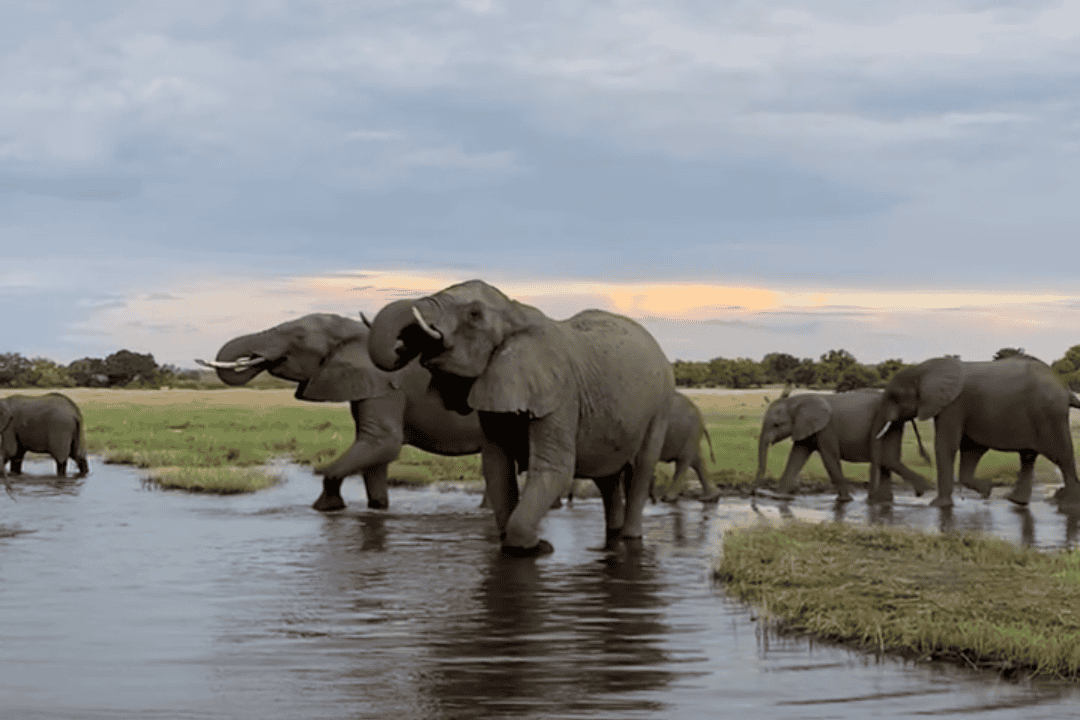
At one point, we saw a herd of around 20 elephants on the Namibian side of the river, silhouetted against the late-afternoon sky. Alfred positioned our tender boat a good distance away and stopped.
Then we waited.
The elephants started moving around the edge of a small bay. Slowly, they came closer. Alfred didn’t chase them or try to manoeuvre us into their path. He simply seemed to understand where they were going.
They were coming down to the river for one last drink before disappearing back amongst the trees.
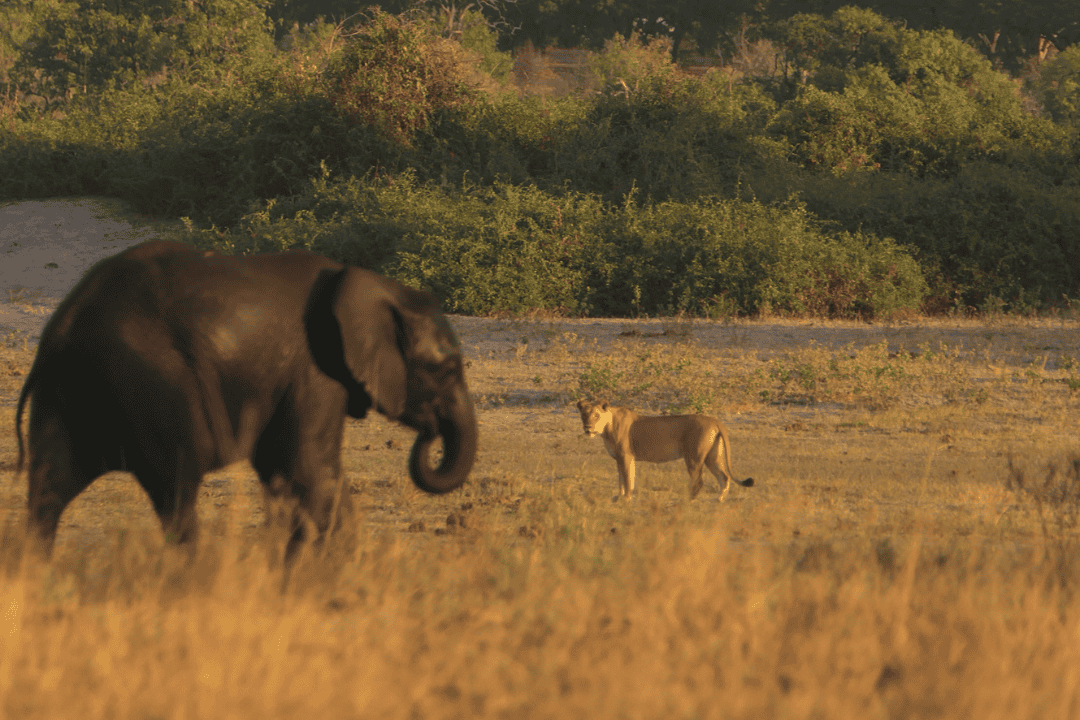
Over the course of about seven minutes, those elephants went from being shapes on the horizon to standing only metres from us at the water’s edge.
I’ll admit that I was frightened for a moment. Their sheer size is difficult to describe when there are so many of them standing that close to you. But they were completely calm and entirely unbothered by our presence. They weren’t coming towards us because we were interesting. They were simply going about their evening.
We happened to be there.
And that made the sighting even more extraordinary.
Everyone on the tender boat was absolutely elated. The sun was setting, the sky had turned moody and a slight breeze had started to cool the evening. By the time we returned to the Chobe Princess at Elephant Bay, we were all grinning.
There were no other boats around us. For that evening, it felt as though we had that stretch of river completely to ourselves.
Waking up exactly where you want to be
Over dinner, we got to know our fellow travellers better: South Africans now living in Australia and a young couple from the Netherlands. We were lucky in that everyone had similar interests, and by the end of dinner we’d collectively decided that an early-morning birding activity sounded like an excellent idea.
The following morning was surprisingly chilly. Before sunrise, I stood on the deck with a cup of coffee and watched local fishermen moving along the river. After the heat we’d had at Ichingo, the cool breeze coming off the water felt completely different.
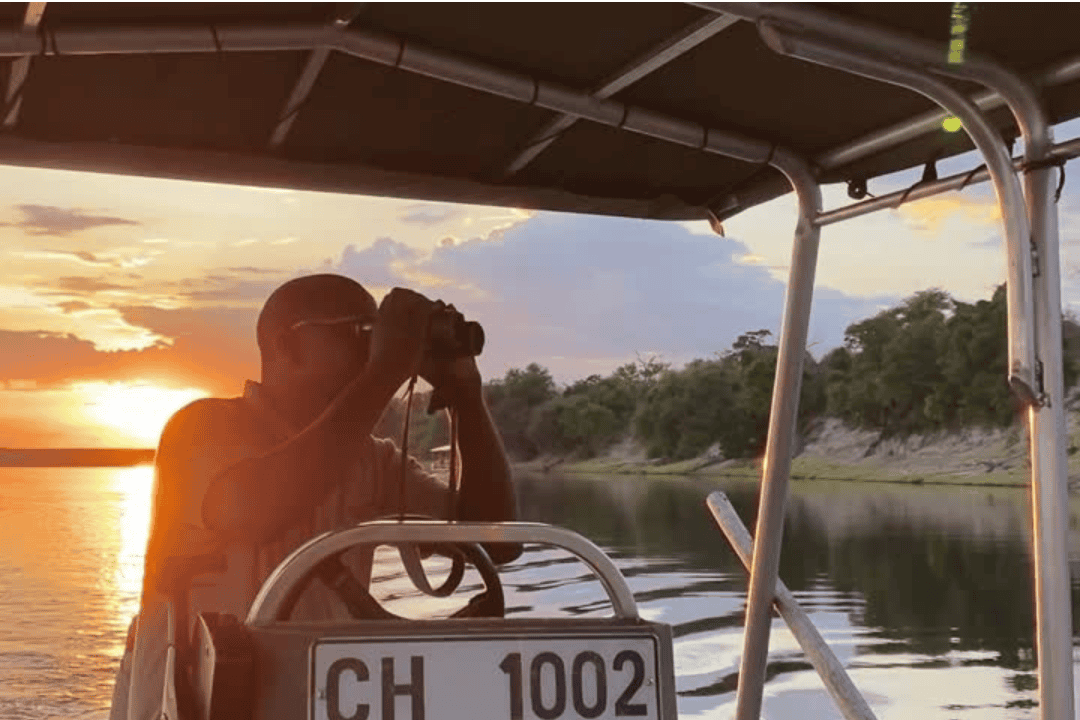
At 6:30 am, we headed out with Alfred. Directly across from our mooring at Elephant Bay, he had spotted lions resting beneath the trees. We desperately wanted to see them properly. Alfred scanned the bank with his binoculars and circled back a few times to change our angle, but no matter how hopeful we were, the lions weren’t going to cooperate.
That’s safari.
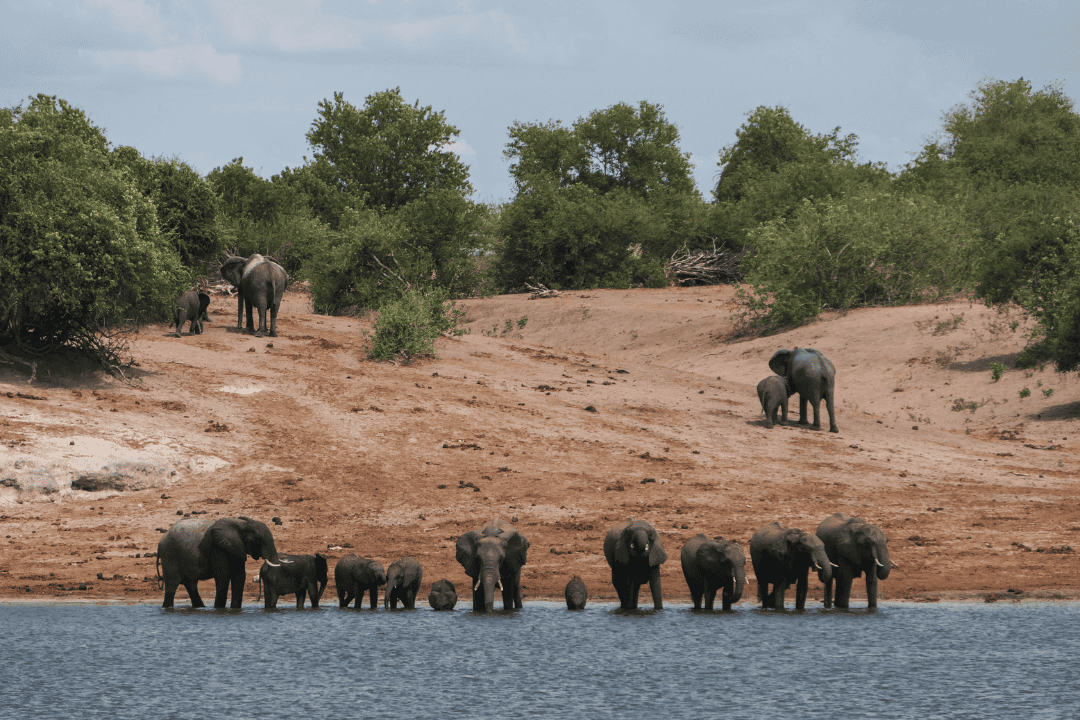
There were plenty of birds instead, and after the morning activity we returned to the Chobe Princess for breakfast with elephants in view. Later that morning we headed out again, seeing enormous water monitor lizards, crocodiles sunning themselves on the banks, buffalo grazing, hippos in the shallows and more elephants than I could count.
At lunchtime, we returned onboard and began sailing towards Serondela. The clouds grew heavier while we relaxed on the boat, but by the time we went out again later that afternoon, the skies had cleared.
And the elephants were waiting.
This time, we watched a herd come down to drink and then begin crossing the river. Afterwards, the sunset put on another show as we made our way towards Serondela, where the Chobe Princess was waiting for us at her new mooring for the evening.
After dinner, with the wine flowing and the conversation getting increasingly entertaining, we spent a little time outside under the stars listening to lions calling from the park before eventually admitting that another early morning was only a few hours away.
We could have done less. We chose not to.
My sister and I are fairly adventurous travellers, so given the option of another early start, we usually took it. We birded in the mornings, returned for breakfast, went out again, visited a local village, learnt about the area, joined in some dancing and bought a few keepsakes.
One afternoon, the clouds finally opened and rain poured down while we were back onboard for lunch. Nobody seemed particularly bothered. We found some of the games onboard and kept ourselves entertained while we waited for the weather to pass.
By around 5 pm, the rain had stopped.
So naturally, we went out again.
It was chilly after the rain, but the river was beautiful. The excursion wasn’t particularly long, and we didn’t need it to be. It was our final activity of the trip, and by then I think we were simply absorbing the last of it.
The important thing is that we could just as easily have done less.
That is one of the things I understand better about this combination now. There is plenty to fill your days if you want it, but there is no requirement to race through them. You can fish, bird, explore villages and head out on every wildlife activity. Or you can sleep a little later, sit beside the pool at Ichingo, order another coffee, stay on deck aboard the Chobe Princess and see what comes past.
The river doesn’t need you to hurry.
Six nights later
On our final night aboard the Chobe Princess, we stayed up a little later. Over the previous nights we’d crossed borders, counted birds, caught tiger fish, stood inside a baobab tree, watched elephants drink and swim, spent time in villages, eaten incredibly well, listened to lions in the darkness and watched the Chobe change around us from morning to evening.
Most importantly, I’d done all of it with my sister.
The next morning, the Chobe Princess began sailing back towards Kasane. We weren’t quite ready to end the trip, so we travelled back to Victoria Falls for one final night and stayed at Mbano Manor, using their shuttle to visit the Falls before heading home. After coming all that way, it seemed ridiculous not to see them.
Looking back, though, it is those six nights on the Chobe that have stayed with me.
For international travellers, particularly, I think there is a temptation when you finally reach Africa to keep moving. You’ve travelled so far that you want to see everything. Another lodge, another flight, another destination.
There is nothing wrong with that. But this trip reminded me that sometimes staying in one region for longer gives you more, not less.
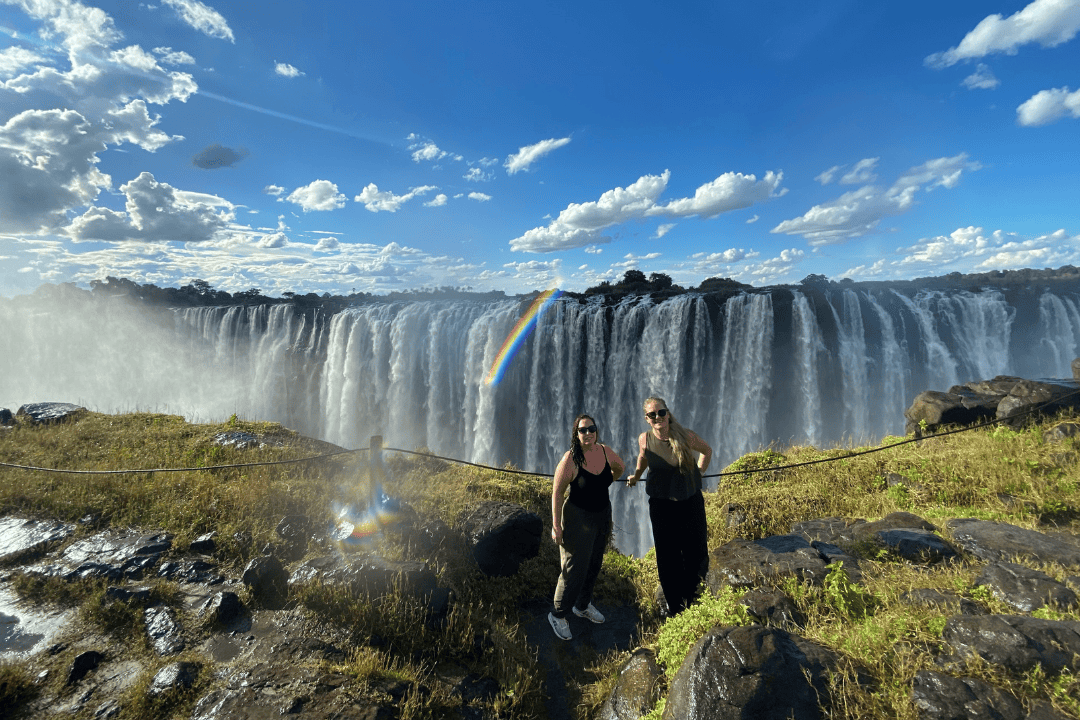
At Ichingo, we had a home on the island, our own guide and boat, and the freedom to explore according to whatever caught our interest that day. It was warm, personal and wonderfully down-to-earth.
Then we moved onto the Chobe Princess and the rhythm changed. We unpacked again, settled into supreme comfort and allowed the houseboat to carry us into a different part of the river, where wildlife viewing became woven into the entire day rather than something we only experienced when we left for an activity.
At Ichingo, we went out to explore the river. On the Chobe Princess, the river travelled with us.
Six nights. Two completely different ways of experiencing the Chobe. And, for once, nowhere else we needed to rush to.
I can’t wait to do it again.
A few questions about our trip
Can you combine Ichingo and Chobe Princess in one itinerary?
Yes. We travelled from Ichingo directly to the Chobe Princess by tender boat. Because both experiences are within the Chobe River region, changing properties felt like part of the journey rather than losing another day to airports and long transfers.
How many nights should you spend at Ichingo and Chobe Princess?
We spent three nights at each, which gave us six nights on the Chobe. Two or three nights at each works well, depending on your wider itinerary and how much time you want to spend in the region.
What is the difference between Ichingo and Chobe Princess?
Ichingo is a secluded lodge on Impalila Island, with a private guide and tender boat allocated to each tent. Our experience there centred around birding, fishing, cultural experiences and exploring the surrounding waterways at our own pace. Chobe Princess is a houseboat safari, where you stay on the river and move between different mooring areas, with tender-boat activities taking you out for closer wildlife viewing.
Can you travel from Victoria Falls to Ichingo and Chobe Princess?
Yes. We flew into Victoria Falls and travelled by road through Zimbabwe and Botswana to Kasane before crossing by tender boat into Namibia. The transfer involves several immigration formalities, and visa requirements depend on your nationality, so these should always be checked before travelling.
Is Ichingo good for birding and tiger fishing?
Both were highlights for us. Having our own guide and tender boat meant Success could shape our outings around what interested us, whether that was searching for particular birds or spending a morning trying to land a tiger fish. Fishing is catch-and-release.
Do you have to do lots of activities?
No. We chose to pack quite a lot into our six nights because that’s how my sister and I like to travel. Both experiences also give you plenty of opportunity to slow down, whether that’s relaxing beside the pool at Ichingo or simply sitting on deck aboard the Chobe Princess and watching the river.