Why the Chobe Makes Photographers Better
A masterclass with the Dooley Brothers
There are places you visit once, photograph everything, tick the list, and move on.
And then there are places that work on you.
For brothers, Peter and David Dooley, the Chobe is the latter. Not because it is easy, or predictable, or endlessly curated for the tourist. Quite the opposite. The Chobe is quiet, unhurried and spacious, sometimes to the point where first time visitors don’t know what to do with the silence. A river system with enough breathing room for wildlife to behave like wildlife, and enough stillness for photographers to stop “taking” images and start creating them.
They have returned again and again over the years (in fact, eight times in the last 14 years), because the river keeps raising the bar.
The Chobe does not hand you a portfolio, it hands you a standard – one you only recognise after you’ve missed a few shots.
This is the first story in our series, The Chobe Through a Master’s Lens, anchored by the Dooley brothers’ deep experience on the river and their distinct specialisations: Dave with birds, Peter with landscapes.
Dave and Peter have just returned from a trip to the Chobe, have a look at their photos from their recent stay with us here.
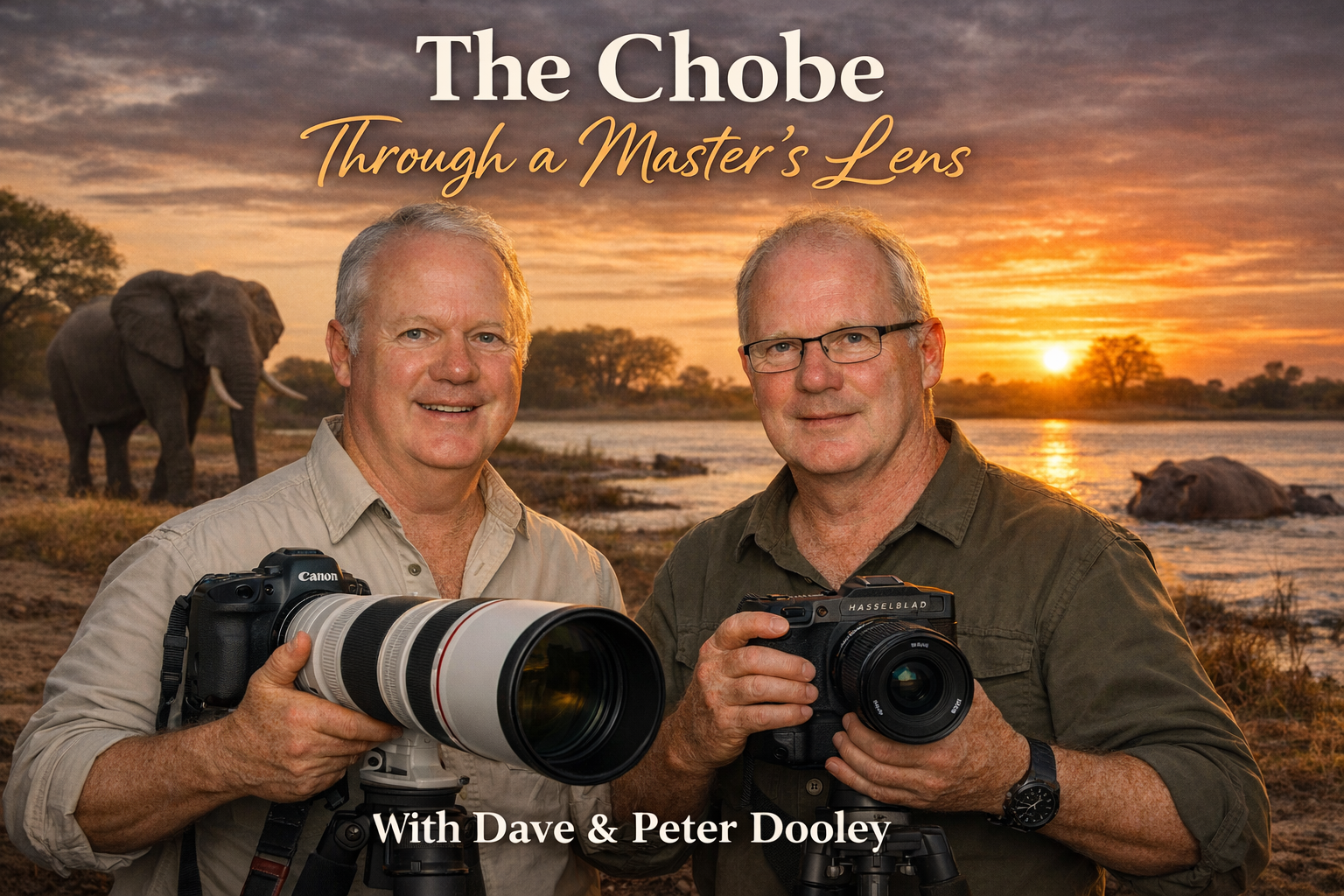
Meet the brothers behind the lens
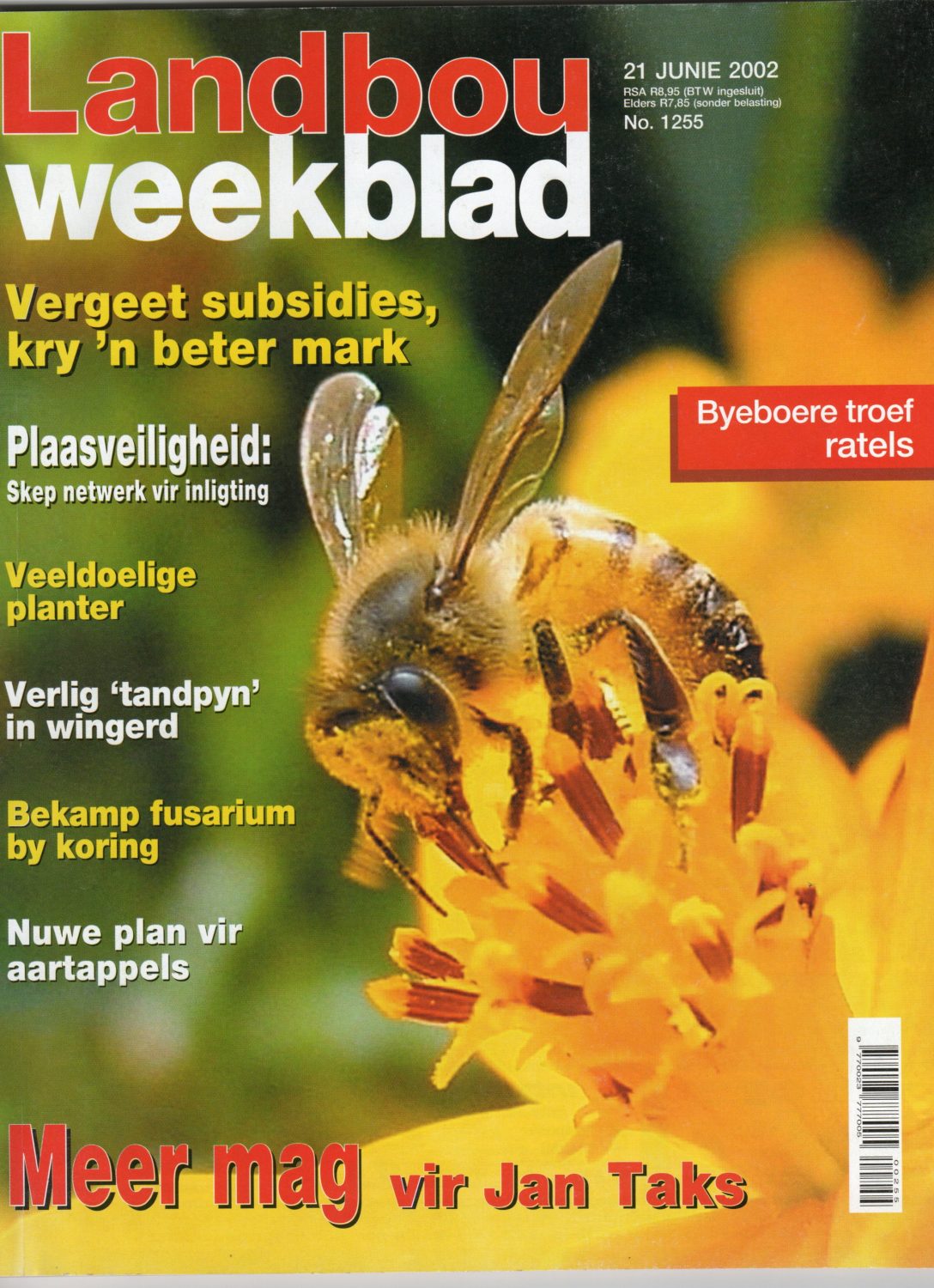
Peter’s photographic career began 25 years ago, at the front edge of digital. He bought one of the first digital cameras to hit the market and, with fewer than 500 shutter clicks behind him, captured an image of a bee in December 2001 that landed on the cover of Landbou Weekblad. That early moment catapulted him into commercial photography.
He built a life around the craft, working across publications and studio work, but over time he felt the difference between success and fulfilment. Commercial photography, he says, did not “feed my soul”, and he returned to his roots: African landscapes and nature, created as art and shared as story.
David’s path is more unexpected, and that is what makes it compelling. He accompanied Peter on shoots for years, until a moment on the Chobe in 2010 changed his trajectory: a Malachite Kingfisher at close range from a tender boat. He took a few snapshots on a small Sony travel camera and knew, immediately, that birds were his subject.
In 2021, Peter encouraged him to buy his first professional camera and then accelerated his learning by sharing decades of technical experience.
Over his seven visits, Dave has photographed an exceptional range of birdlife on the Chobe. Among these are 16 regional Red List species, an indication not only of the river’s biodiversity, but of the time, patience, and seasonal understanding required to encounter them.
In the past 14 months, Dave’s bird work has been recognised by African Birdlife, including multiple published features and an image selected for their 2025 calendar.
Two photographers. Two disciplines. One river that keeps sharpening both.
Regional Red List bird species photographed on the Chobe include:
Critically Endangered (CR)
- Hooded Vulture (Necrosyrtes monachus)
- White-backed Vulture (Gyps africanus)
Endangered (EN)
- Southern Ground Hornbill (Bucorvus leadbeateri)
Vulnerable (VU)
- Pel’s Fishing Owl (Scotopelia peli)
- Yellow-billed Stork (Mycteria ibis)
- African Finfoot (Podica senegalensis)
- African Pygmy Goose (Nettapus auritus)
- White-backed Night Heron (Gorsachius leuconotus)
- Lesser Jacana (Microparra capensis)
- Pink-backed Pelican (Pelecanus rufescens)
- Half-collared Kingfisher (Alcedo semitorquata)
Near Threatened (NT)
- African Pygmy Goose (Nettapus auritus)
- White-backed Duck (Thalassornis leuconotus
- African Darter (Anhinga rufa)
- Black-crowned Night Heron (Nycticorax nycticorax)
- Great Egret (Ardea alba)
- Marabou Stork (Leptoptilos crumenifer)
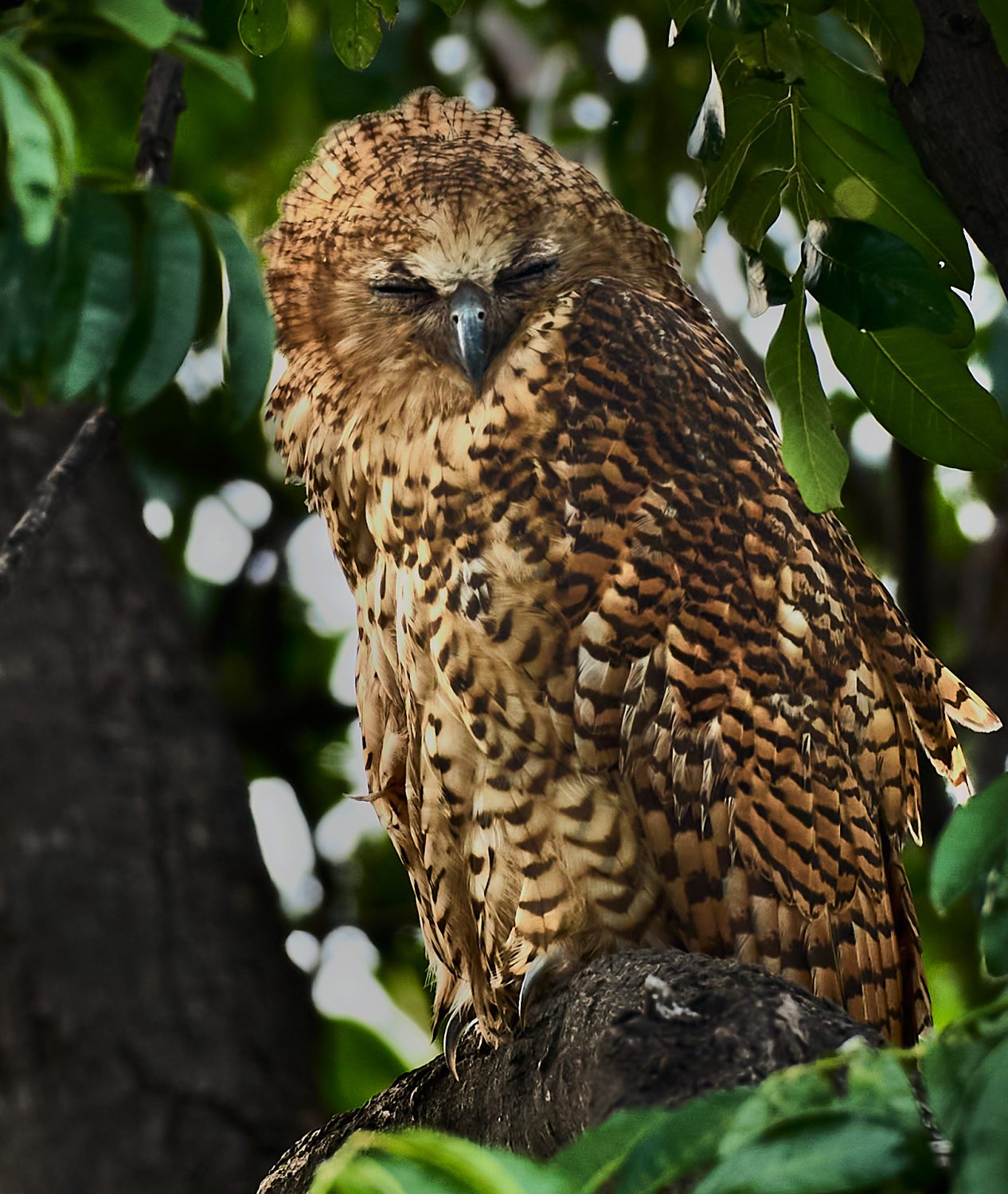
Pels Fishing Owl Image supplied by Dave Dooley
How the Chobe first called them
The Chobe first entered Dave’s awareness on a land-based business trip to the region. Peter was not with him on that first encounter.
But it was enough to plant a conviction: the Chobe could not be understood from the deck of a hotel. It had to be experienced from the river itself. So he returned, booking a trip for himself, Peter, and his sister, a decorated photographer with PSSA, and that first river-based experience “changed everything”.
This distinction matters for anyone especially photographers researching a photographic safari in Africa. Your physical position on the Chobe, being on the water alters what you can see, how you can frame it, and how wildlife responds to your presence. Staying on the river rather than travelling to it, is a huge advantage. When your base is already on the river, photography unfolds at the pace of the environment.
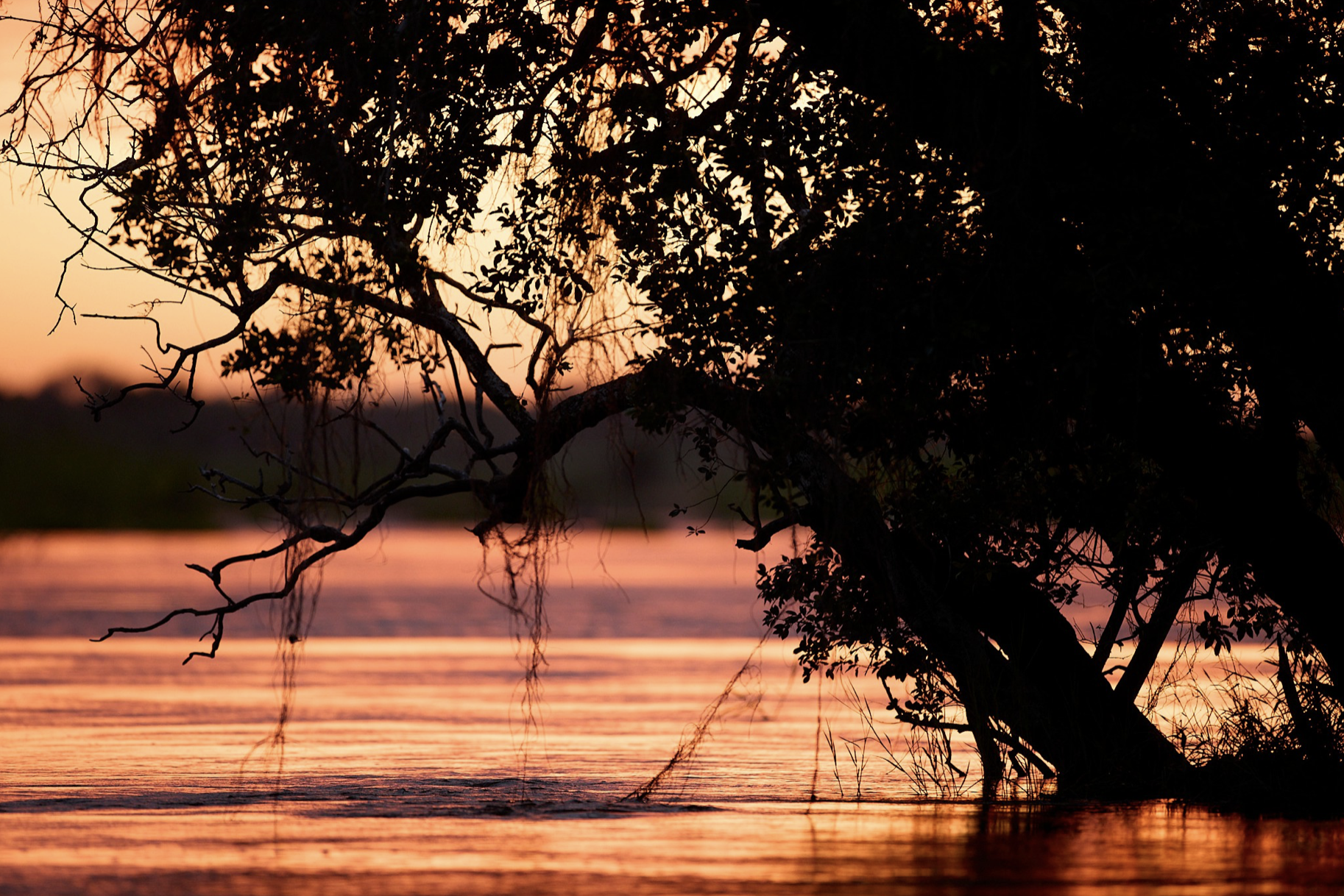
Chobe River Sunrise Image supplied by Dave Dooley
The Chobe as a teacher: quiet, space, and a different kind of “wild”
We asked the Dooleys what makes the Chobe shift from destination to mentor, and they begin with what many travellers overlook: quiet and a sense of stillness.
They describe the Chobe as “a quiet, unhurried destination” that is not crowded in the way many African Safari hotspots have become. With open spaces and less pressure, birds and wildlife thrive. It is also a stopover for thousands of migratory birds, which adds seasonal depth and a level of unpredictability.
The peace and tranquillity, they say, resonates. It becomes a place “where one could find one’s soul”, touched by wind, wildlife, and an “un-spoilt river that flows quietly by”. For them, it is “a perfect environment to create art”.
That is the philosophical spine of this series. The Chobe changes the photographer. Being able to remain on the water for extended periods, without the pressure to move on, allows photographers to sit with a moment until it reveals itself.
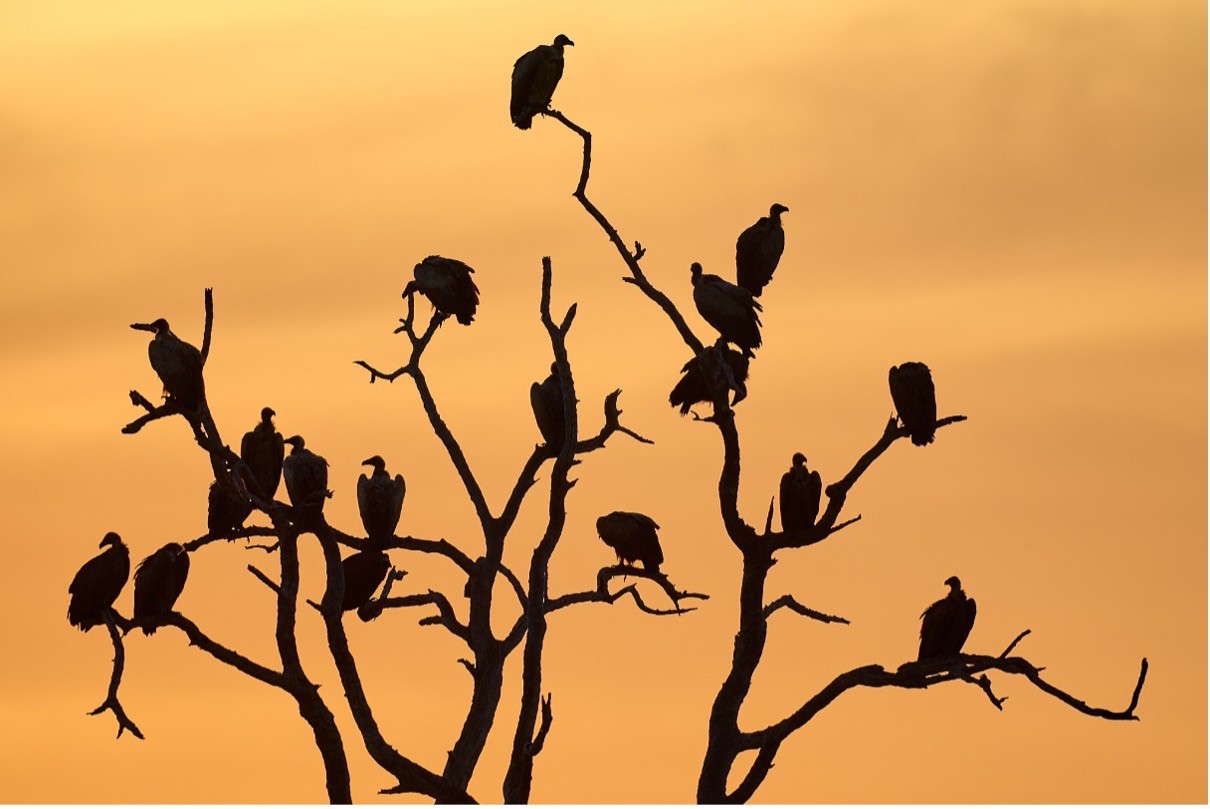
Vulture Silhouette Image supplied by Dave Dooley
What the river insists you learn
Chobe photography can be richly rewarding for beginners and professionals, but it is not always forgiving. Dave is blunt about this: bird photography is challenging, and it is not as easy as it looks.
The river insists on preparation. Not in a vague, motivational way, but in a practical, disciplined way that directly affects results.
Their planning includes: bringing the right equipment and knowing it intimately, learning bird calls and habits, understanding timing and locations, and even arguably the most important is checking the best time of year for target species.
In other words, the Chobe rewards intention. “Landscape and wildlife photography is an art and done right, produces outstanding results.”
Patience and preparation are not optional
If the Chobe were a mentor, what would it teach? Dave answers with a grin you can hear in the words: “the five P’s of photography are: Patience, patience, patience and perseverance… and did I mention patience.”
This is where the river becomes more than a place to take pictures. It becomes a training ground for attention, because sooner or later, you have to decide whether you’re willing to sit still long enough for the moment to arrive.
Dave talks about sitting for extended periods, sometimes up to three hours in the same spot, waiting for behaviour, alignment, and timing to converge. He calls it the opposite of “Point-Shoot-and-Go”.
The payoff is not only an extraordinary image. It is the meditative stillness of nature, and the ability to anticipate a subject because you understand what it is about to do. That level of patience is only possible when photographers feel supported and not rushed – when guides understand that waiting is part of the process.
That anticipatory skill is what turns a competent photographer into a consistent one.
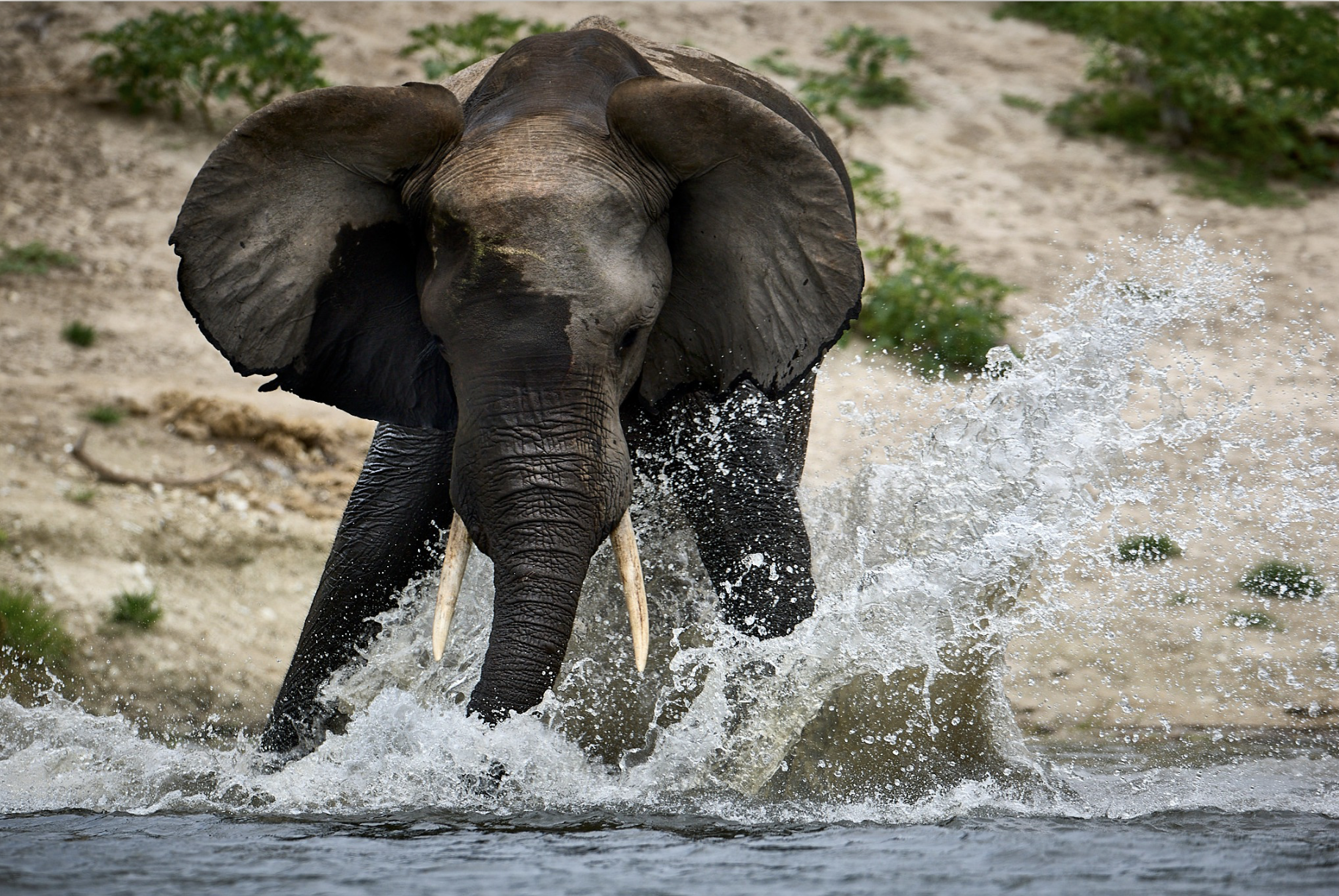
Solo African Elephant Bull image supplied by Dave Dooley
Why photography from the water changes everything
One of the most practical truths in this interview is also one of the most powerful: perspective shapes emotion.
Photographing birds from land, whether from elevated hides or shorelines, often means shooting down on your subject. From a boat, the subject is frequently closer to eye level, which creates engagement and intimacy.
But the boat also changes composition possibilities. The Dooleys describe how freedom of movement on the river has refined their ability to move silently into the ideal position to frame a shot, and even to create minimalist images with clean backgrounds, negative space, and uncluttered simplicity.
This is one of the least discussed reasons the Chobe makes photographers better. It teaches you to simplify, remove noise and to compose with intention.
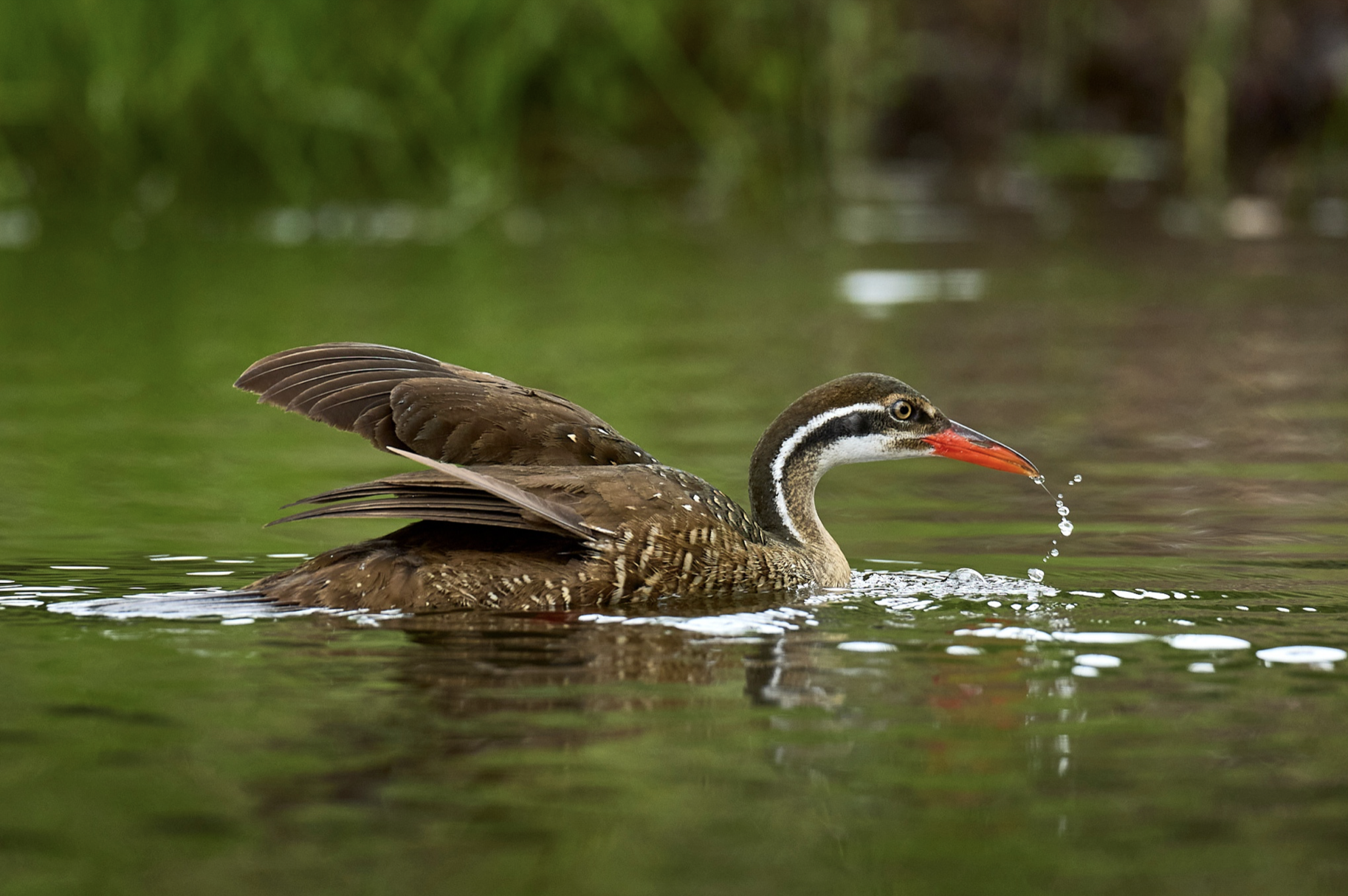
African Finfoot #4 Image supplied by Dave Dooley
The invisible advantage
Here is where the Chobe becomes a proposition for photographers choosing where to invest their time and travel budget.
Field guides are not there to teach you your camera settings, but on the Chobe they can transform your outcomes through something more valuable – positioning, timing, and knowledge.
The Dooleys speak clearly about their experience of their guide’s role in positioning the boat for the best light and wind direction. This matters because birds often take off and land into the wind, and being able to reposition on the water allows the photographer to plan approach angles and capture stronger feather detail and contrast with cross-light rather than flat light.
They also highlight how the guide’s deep knowledge can take you into quieter channels where you may have the space entirely to yourself, and where some of their strongest work has been created.
Dave describes telling a guide which species he wants to photograph in a session and being “totally surprised” by the guide’s ability to take him to the exact spot needed.
He also notes that day-to-day conditions shift constantly, making this local, lived knowledge difficult to replace.
For anyone comparing Chobe photography trips, this difference becomes clear, very quickly – it is not only about what exists in the ecosystem, but about whether the operation can reliably put you in the right place at the right time – consistently enough to build trust that the logistics are handled and you can focus on your list at hand.
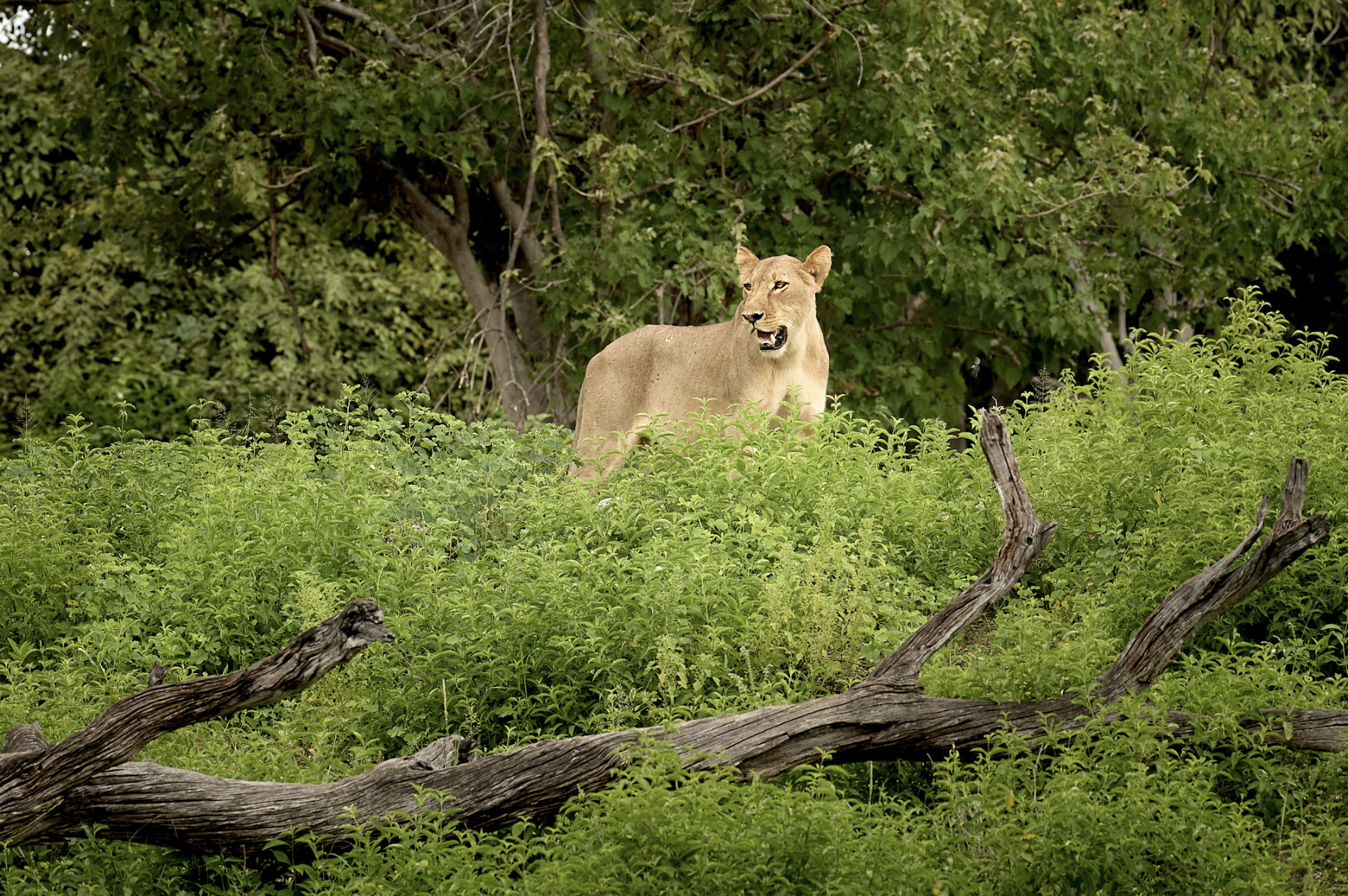
Chobe River Lioness image supplied by Dave Dooley
The photographic boat
High-end photographic gear changes the way you travel. It changes how you plan. It changes how you move.
The Dooleys’ answer here is as operational as it is emotional. They mention the benefit that the Zambezi Queen Collection photographic boat is configured with only six seats, which creates freedom of movement and reduces the common frustrations photographers face: being bumped by another long lens, blocked at the critical second, or missing a shot because the space is congested.
They also speak to maintenance and quality, and how those details contribute to a “perfect photographic experience”.
Then there is the practical side: safety and gear protection. The boat’s flooring and inner sides are lined with durable carpet, which protects equipment, reduces the risk of something going overboard, and even assists in reducing eye strain. Glare off the water resulting in lens flare is controlled by the proper use of the lens hood and the dark floor also plays a role when shooting across the bow of the boat.
It is not glamorous, but it is decisive. When your attention is on behaviour, light, and timing, the last thing you need is friction. Several of the Dooleys’ most published images were created in precisely these conditions.
Light on the river
Photographers chase light, but the Chobe adds something unusual – lift.
The Dooleys explain that light reflects upwards from the river, increasing available light and sometimes adding an unexpected, delicate quality to a subject.
They have also seen and captured how ripples reflect soft curved lines onto subjects, a detail that is almost impossible to replicate elsewhere.
Peter expands this into landscapes. He speaks about reflections as a key compositional advantage, and describes photographing Elephant Bay when the water was so still it looked like glass. He asked the skipper to reverse slowly to avoid creating ripples until the composition was perfect, capturing an extraordinary black-and-white image with his Hasselblad.
This is the Chobe’s gift to landscape photographers: a flat floodplain that, on paper, might seem uninspiring, yet becomes deeply expressive when you work with reflection, atmosphere, and foreground. Peter quotes Ansel Adams: “You don’t take a photograph, you make it.”
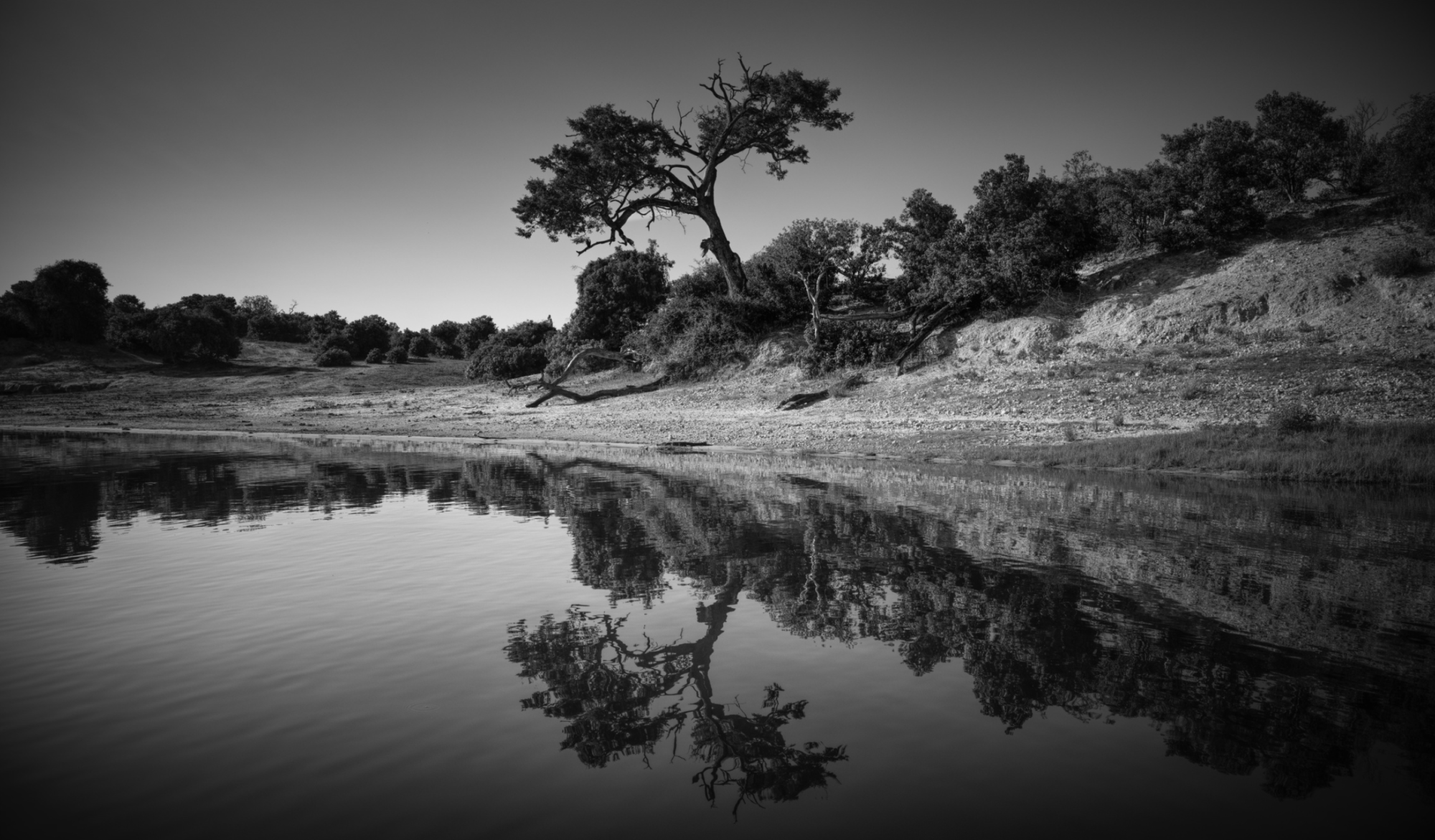
Elephant Bay Mirror image supplied by Peter Dooley
Why they keep returning
The Dooleys quote British journalist Brian Jackman: “Africa changes you forever… Once you have been there, you will never be the same.” They say the Chobe fits that truth perfectly, and that is what keeps drawing them back.
On the practical level, they also return because the Chobe “never disappoints”, and because throughout the year the composition of wildlife changes, offering new opportunities they have not experienced elsewhere.
And on the creative level, the Chobe teaches photographers to engage fully, to keep learning, and to return not because they have run out of destinations, but because the work is not finished.
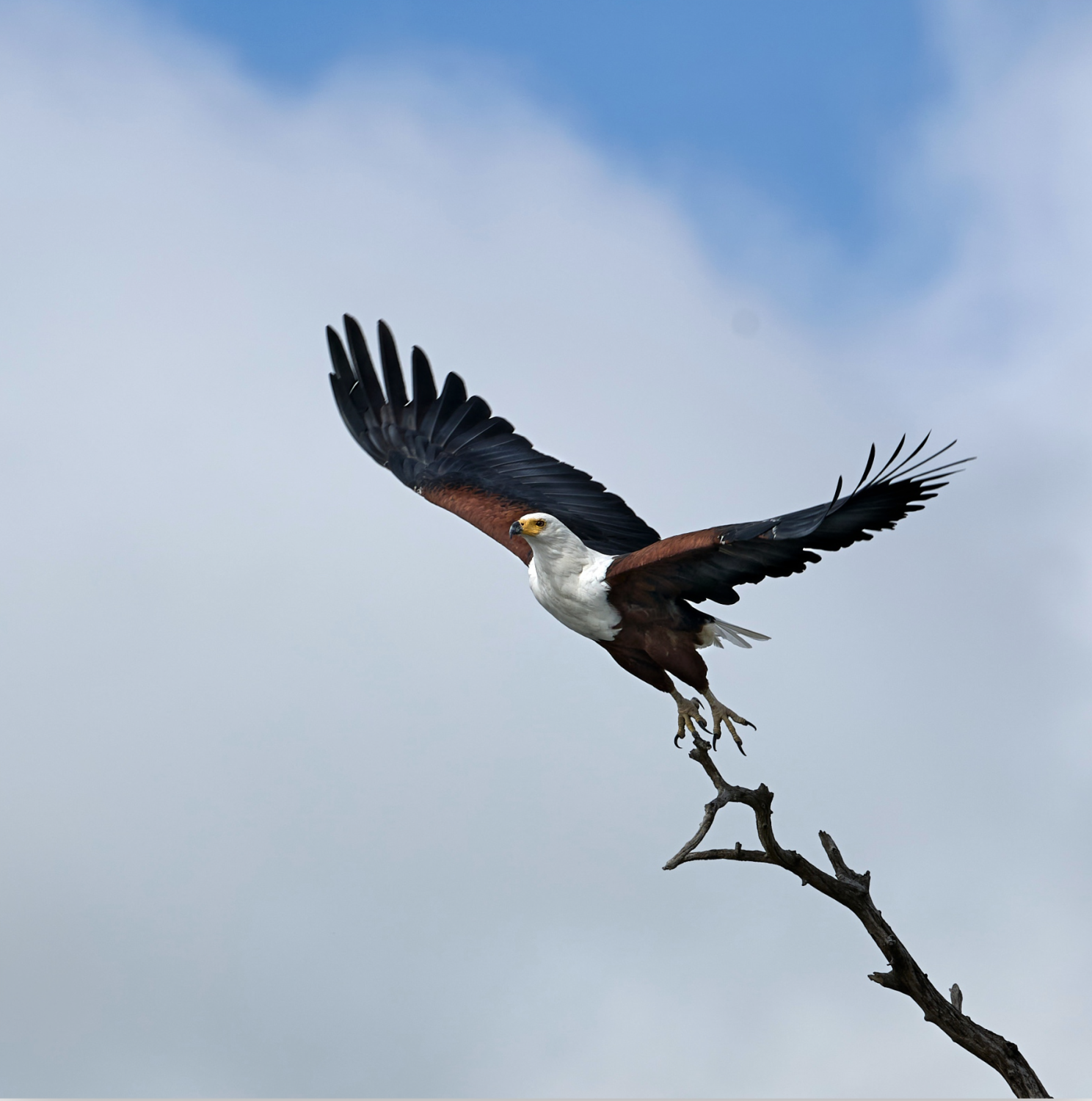
African Fish Eagle Image supplied by Dave Dooley
Gear guidance
If you want to be ready for a photography safari on the Chobe River, the Dooleys keep the guidance refreshingly practical:
- For bird photography, a long lens is critical, ideally 500mm or longer. Prime lenses are preferred, though zooms can work.
- Extenders are not recommended for bird detail because feather detail is compromised.
- Dave typically travels with two Canon camera bodies and professional long lenses, including an 800mm prime and a 400mm prime.
- Peter shoots landscapes with a Hasselblad X2D and wide primes, plus a Canon body for additional flexibility.
This is not about owning everything. It is about knowing what you are trying to create, and packing for that intention.
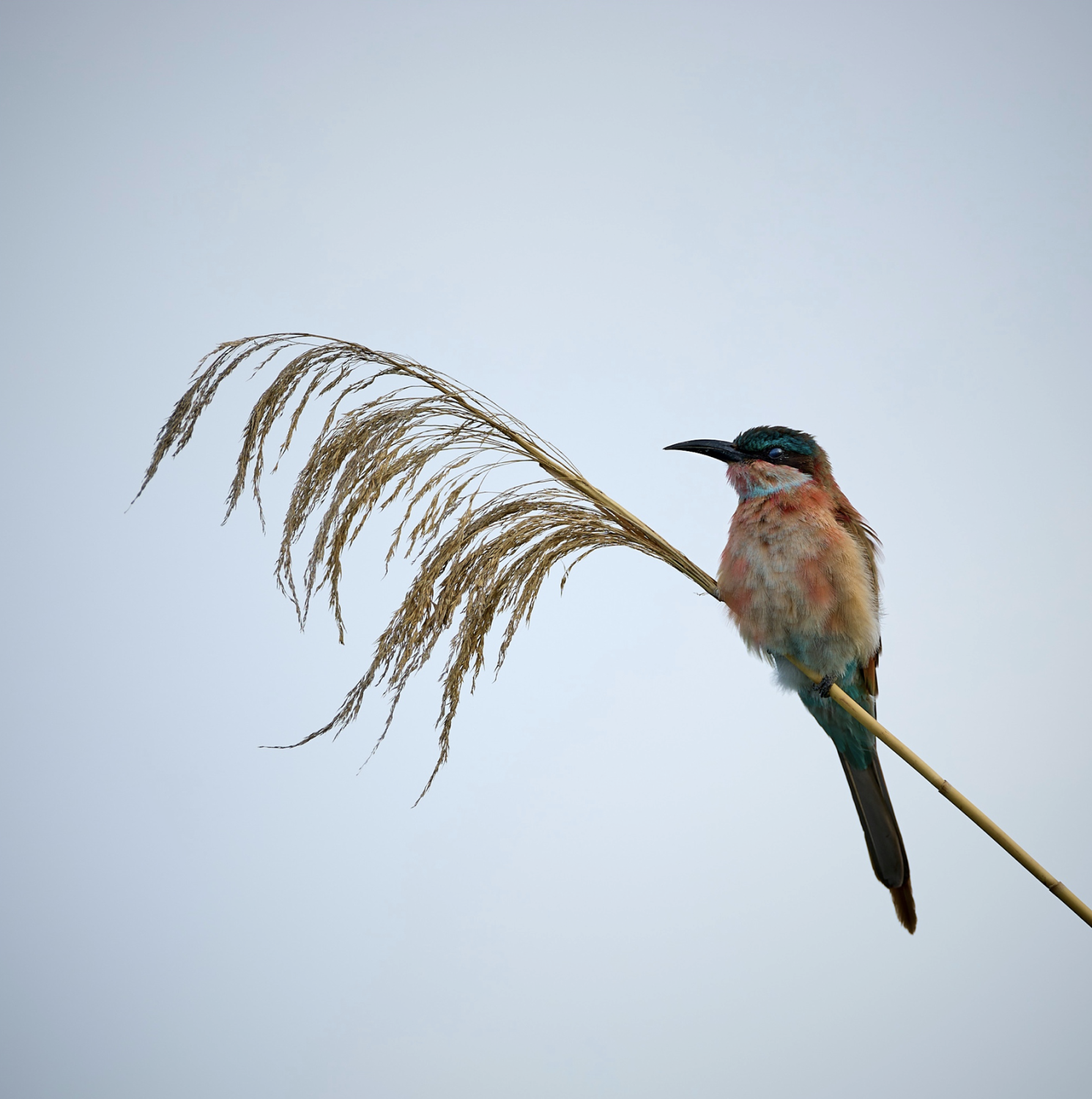
Southern Carmine Bee-eater #1 Image supplied by Dave Dooley
Quick FAQs for readers researching the Chobe as a photography destination
Is the Chobe good for beginners in birding photography?
Yes, but the river rewards preparation. The Dooleys emphasise planning, subject knowledge, and learning to anticipate behaviour.
Why is photography on the Chobe River different from land-based safari photography?
Water-level perspective often puts you closer to eye level with birds and wildlife, which increases engagement. The boat also allows repositioning for light, wind, and clean backgrounds.
Do guides need to be photographers to help photographers?
Not at all. The Dooleys value guides for positioning, local knowledge, and reading the river’s patterns.
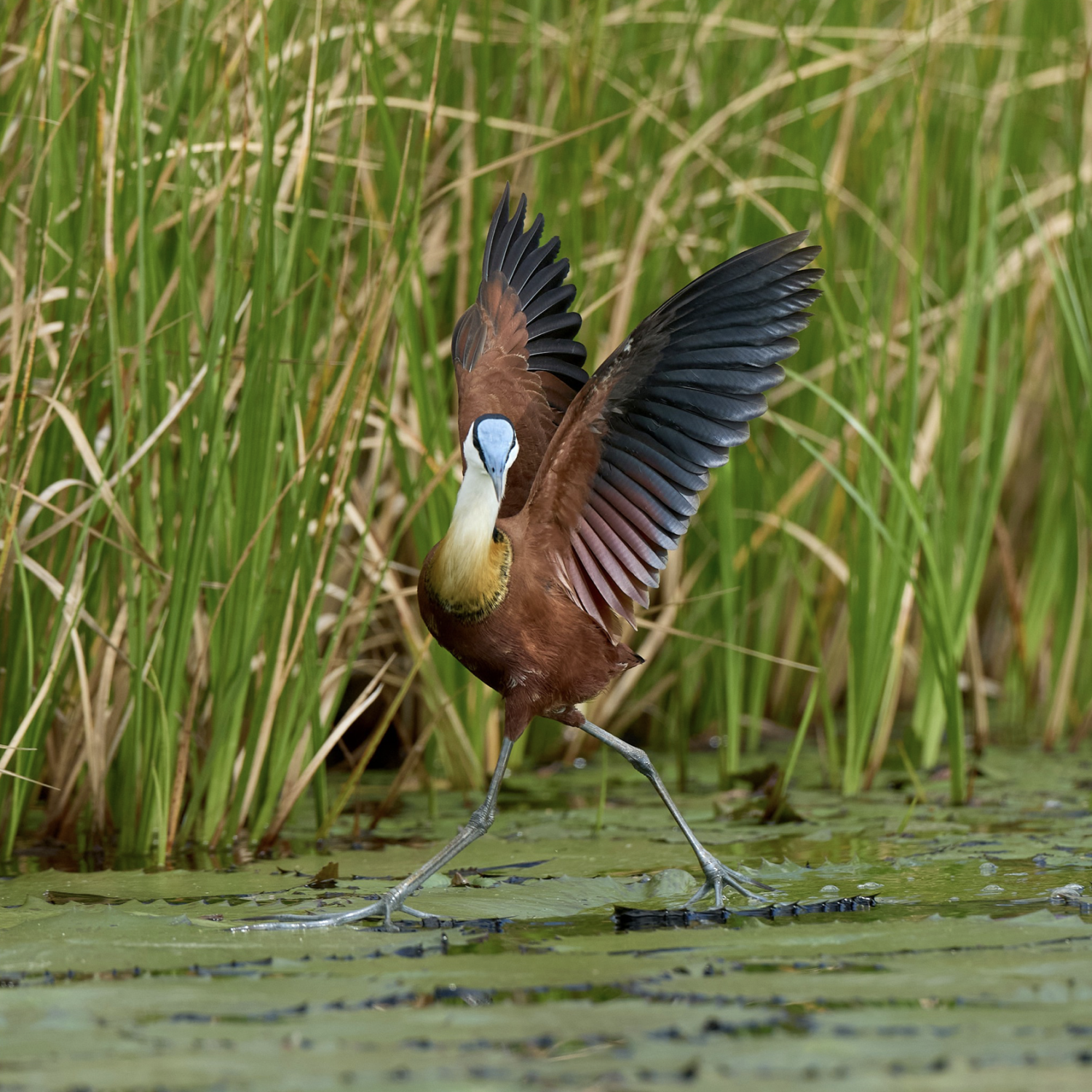
African Jacana Image supplied by Dave Dooley
Acknowledgements & Coming next in the series
We would also like to extend our sincere thanks to Dave and Peter Dooley for the generosity of their time, their insight, and the care with which they share their craft. Their approach is both meticulous and deeply human, and it is a privilege to learn from them. Most of all, we are grateful that they continue to choose to return to the Chobe and to our properties, bringing their passion, patience, and excellence back with them each time. A highlight is seeing selections of their favourite images captured that they generously share with our team – Thank you!
In future blogs, we will go deeper into the Dooleys’ specialisations: Dave’s bird photography masterclass on the Chobe, and Peter’s approach to landscapes, atmosphere, and making images in unexpected places.
Related Topics:
The Chobe That Never Disappoints
© David Dooley and Peter Dooley (2026). All rights reserved.
All photographs, text, and visual content on this website are protected by copyright. No part of this blog – including images, written content, or graphics – may be copied, reproduced, published, stored, transmitted, or used in any form or by any means (electronic, mechanical, photocopying, recording or otherwise) without the express prior written permission of David Dooley or Peter Dooley. Permission is required for screenshotting or any other method of image capture.